

Product Description
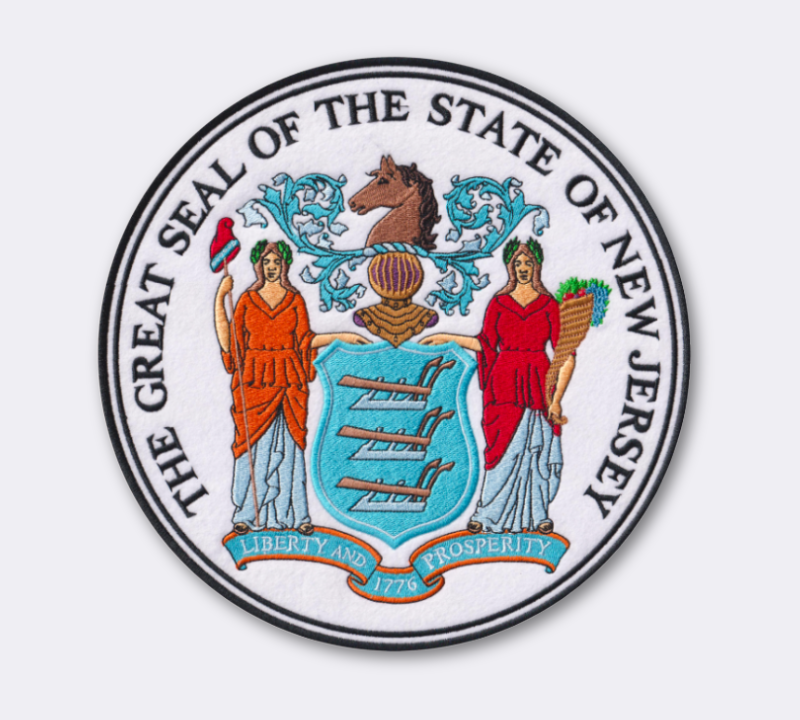
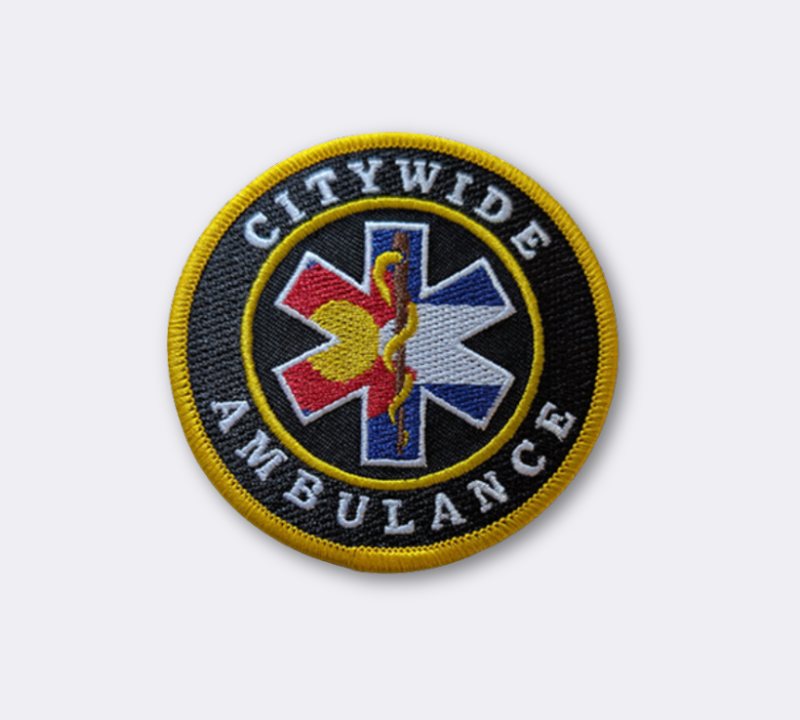
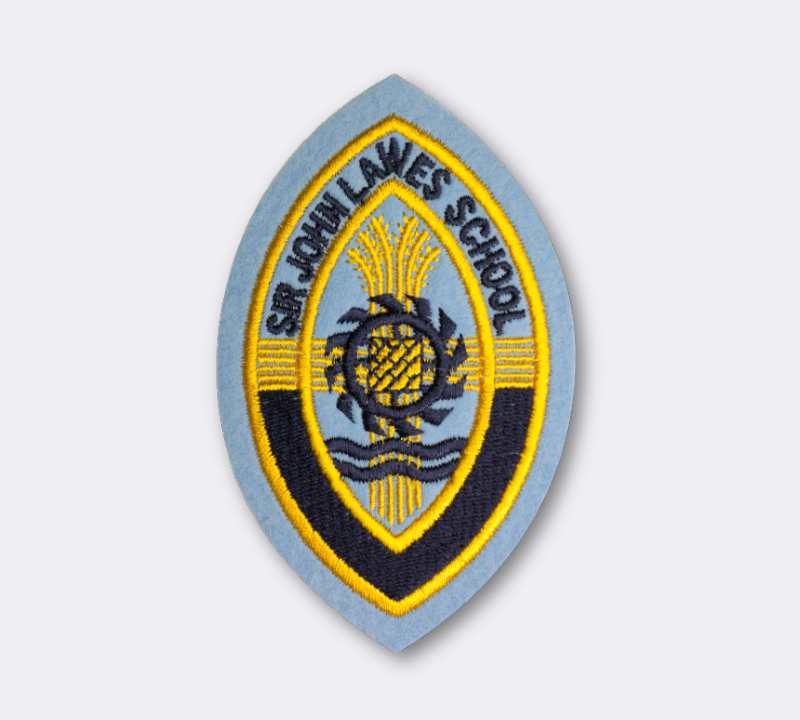
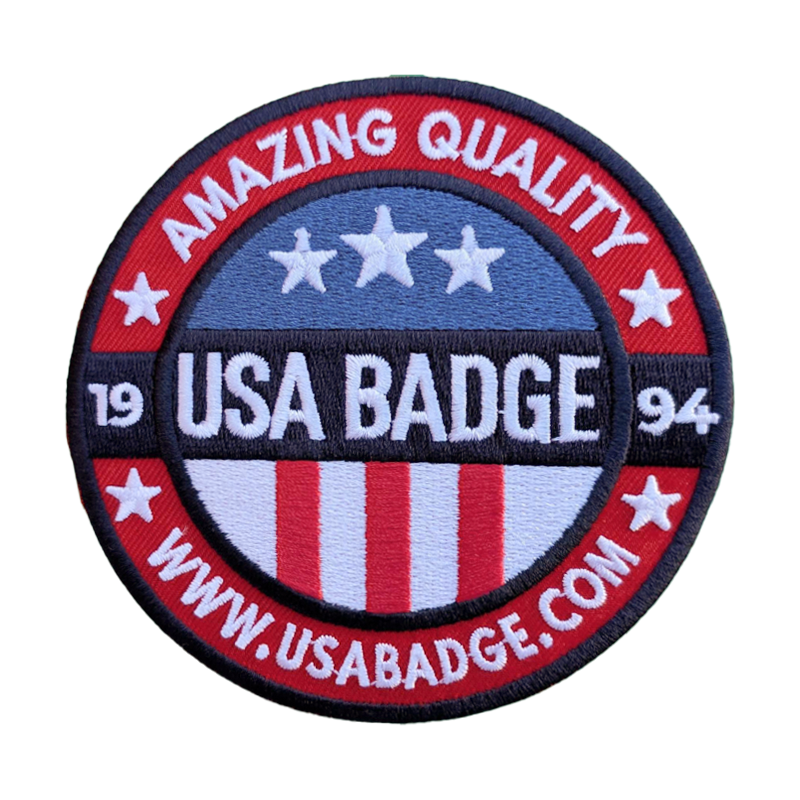
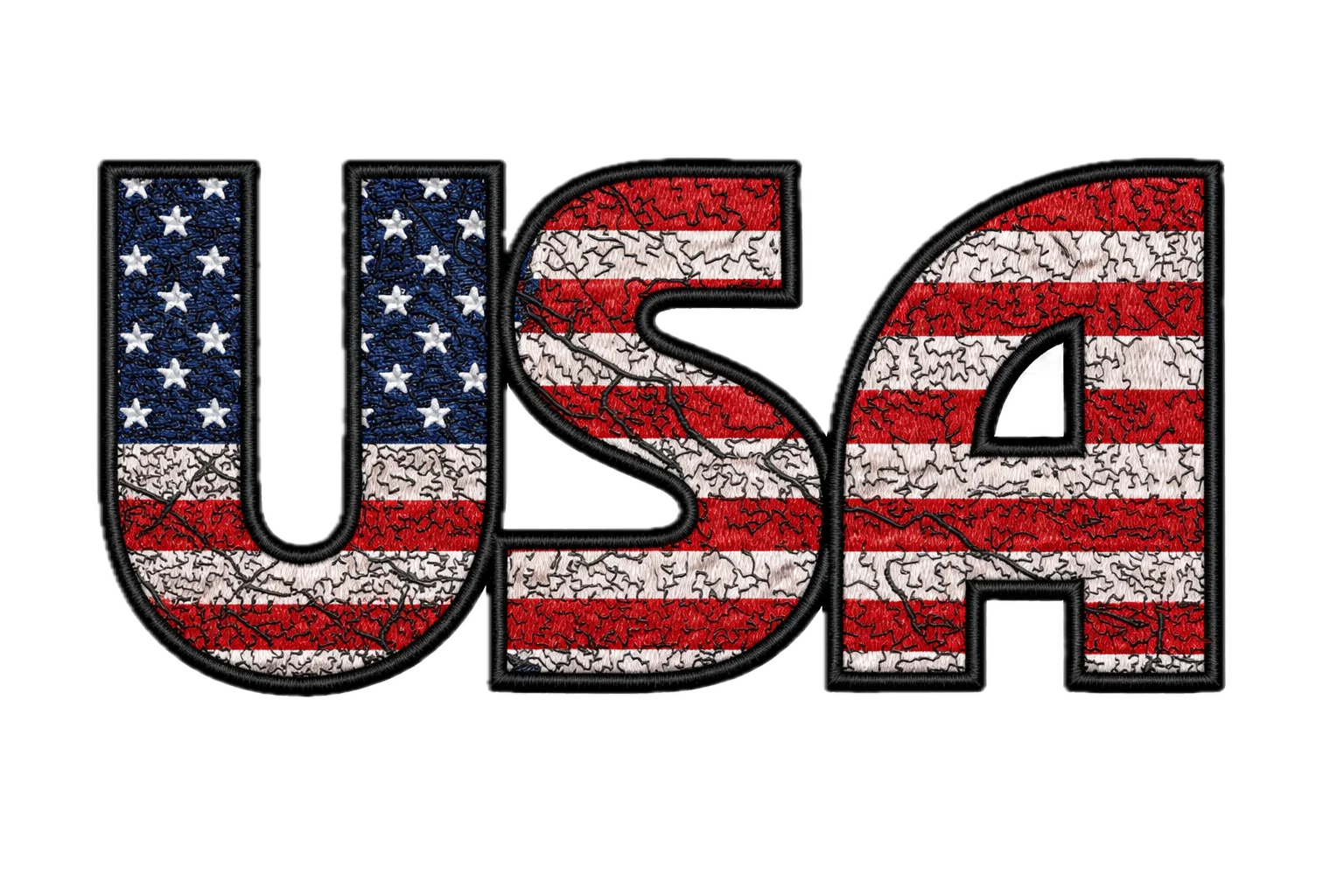
Embroidered patches are one of the most popular and trusted ways to add a logo, badge, crest, name, or design to clothing and accessories. They are made by stitching coloured threads onto a fabric base, giving the patch a traditional raised finish with real texture and depth.
They are ideal for customers who want a durable, professional patch for uniforms, clubs, schools, teams, businesses, events, security wear, workwear, jackets, bags, caps, and merchandise. Embroidery works especially well for bold logos, crests, simple lettering, shapes, emblems, and designs that benefit from a stitched finish.
USA Badge works with experienced production teams that have produced tens of millions of badges over many years and digitized more than a million designs. That experience matters because embroidery is not just about stitching a file; it is about knowing how artwork, thread, fabric, size, backing, border, stitch direction, density, and finishing will behave before the order is made.
The biggest skill is translating your design accurately into what is possible on a real badge. Some details stitch beautifully, some need adjustment, and some are better suited to woven, printed, PVC, or another badge type. Because USA Badge has worked through millions of artwork files and production designs, the team knows what works, what fails, and how to guide the customer before production begins.
Each embroidered patch is custom made from your artwork. After you upload your design and choose the size, quantity, backing, fabric, colours, and finish, USA Badge reviews the artwork and prepares a free digital mockup with a confirmed quote. After mockup approval, a production sample photograph is also provided for approval before the full order is completed. This two-step approval system is designed to catch issues before they move through production.
Embroidery is best for designs with clear shapes, readable text, and strong colour areas. Very small lettering, fine lines, gradients, shadows, and photographic details may need to be simplified so the stitching remains clean and legible. If your artwork is not production ready, USA Badge will review it and advise what needs to be adjusted before production.
Best Uses
- Uniform badges and workwear patches
- School, college, and club badges
- Sports team patches
- Scout, cadet, martial arts, and organisation badges
- Security, service, and event staff patches
- Jacket, hoodie, cap, and bag branding
- Corporate and promotional merchandise
- Motorcycle, lifestyle, and community patches
- Name, rank, role, and department patches
Backing Options
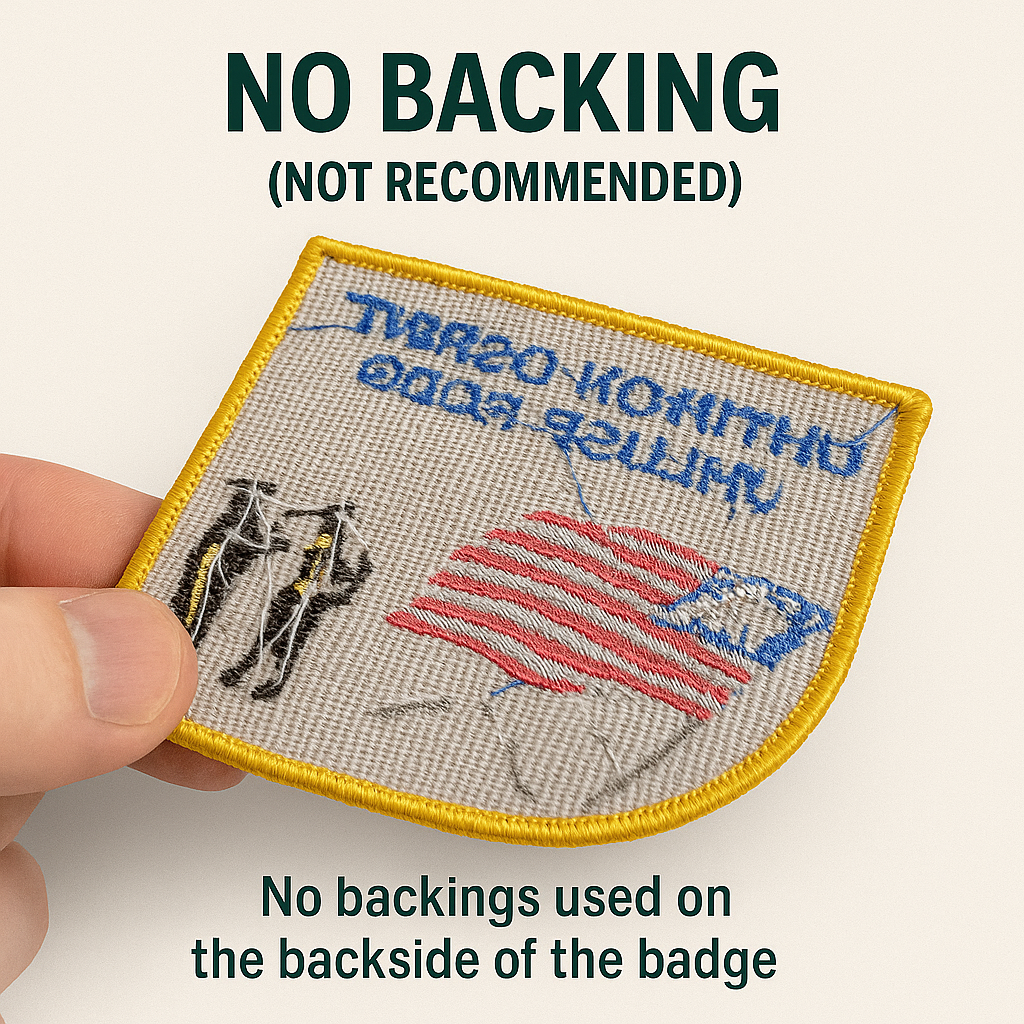
No backing is best when the patch will be sewn directly onto a garment, bag, cap, or accessory. It is often the most reliable choice for long-term use, heavy garments, uniforms, and items that may be washed regularly.
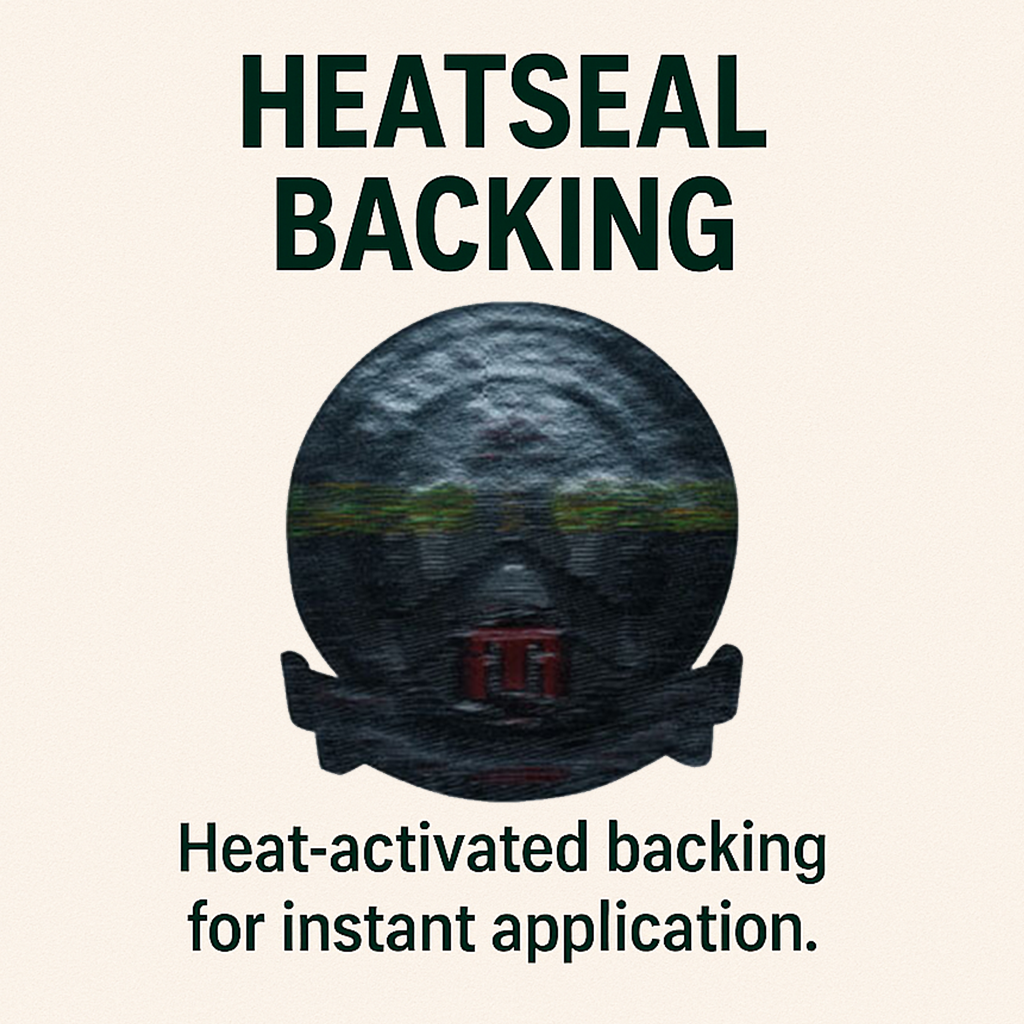
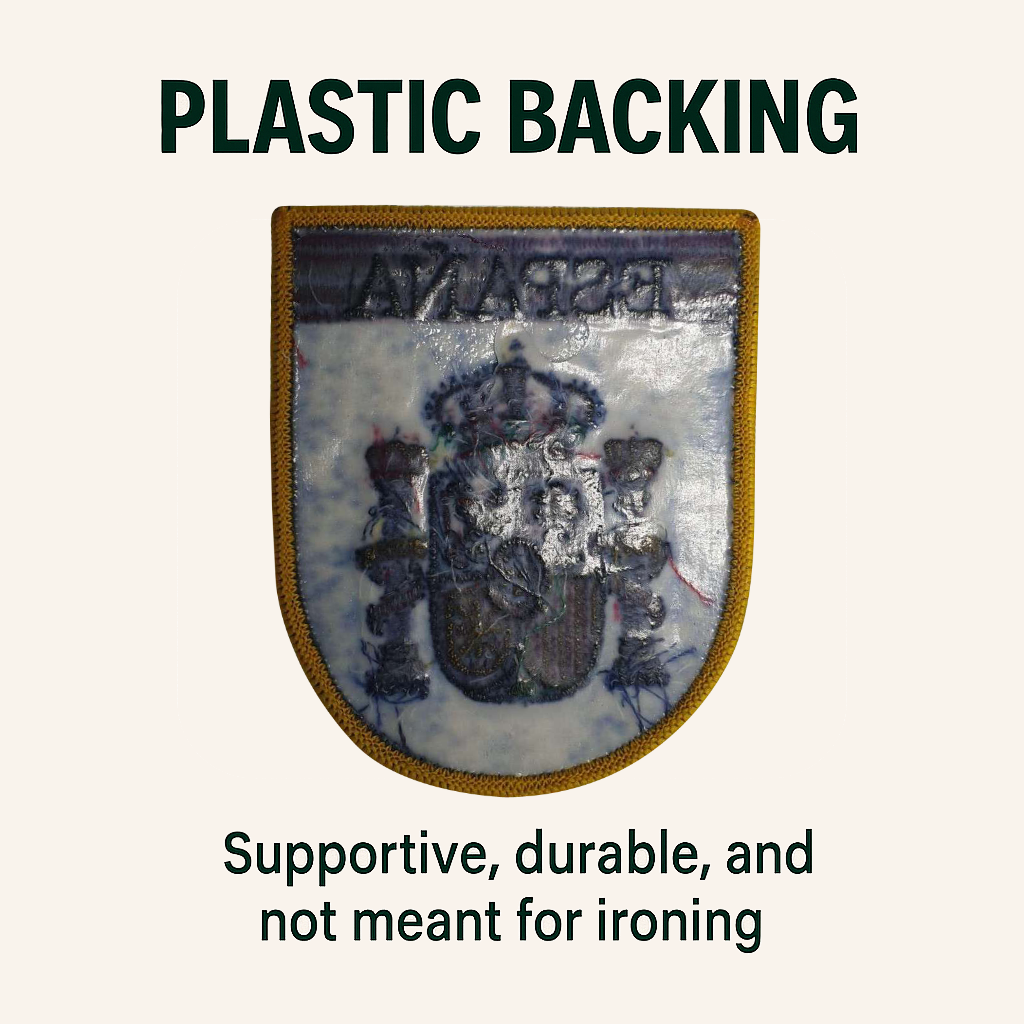
Heat seal backing can be used for compatible heat-press application. It is useful when the garment and equipment are suitable, but it should be applied with the correct heat, pressure, and timing. Some fabrics, coatings, waterproof finishes, or delicate garments may not be suitable for heat application. For heat seal orders, the border choice matters: satin border is usually a better option than merrow border because the adhesive can reach right to the edge.
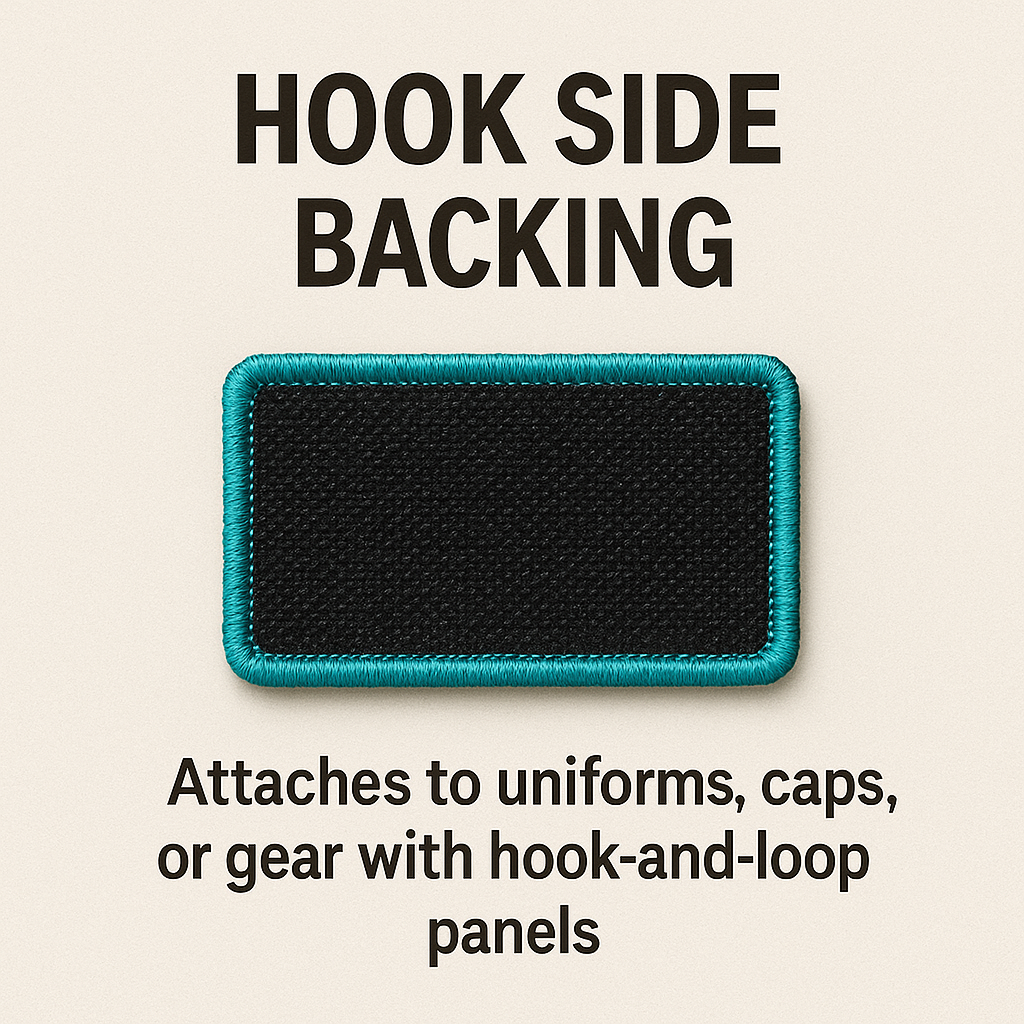
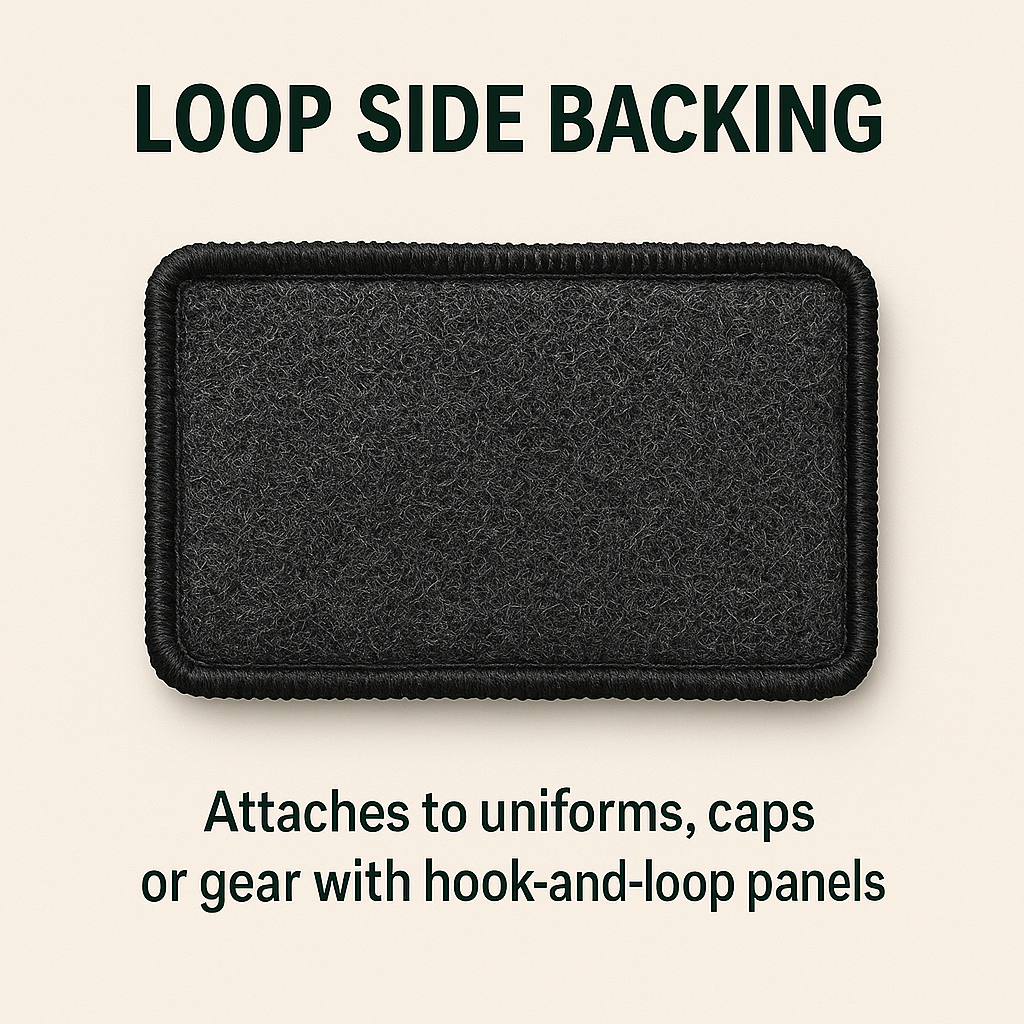
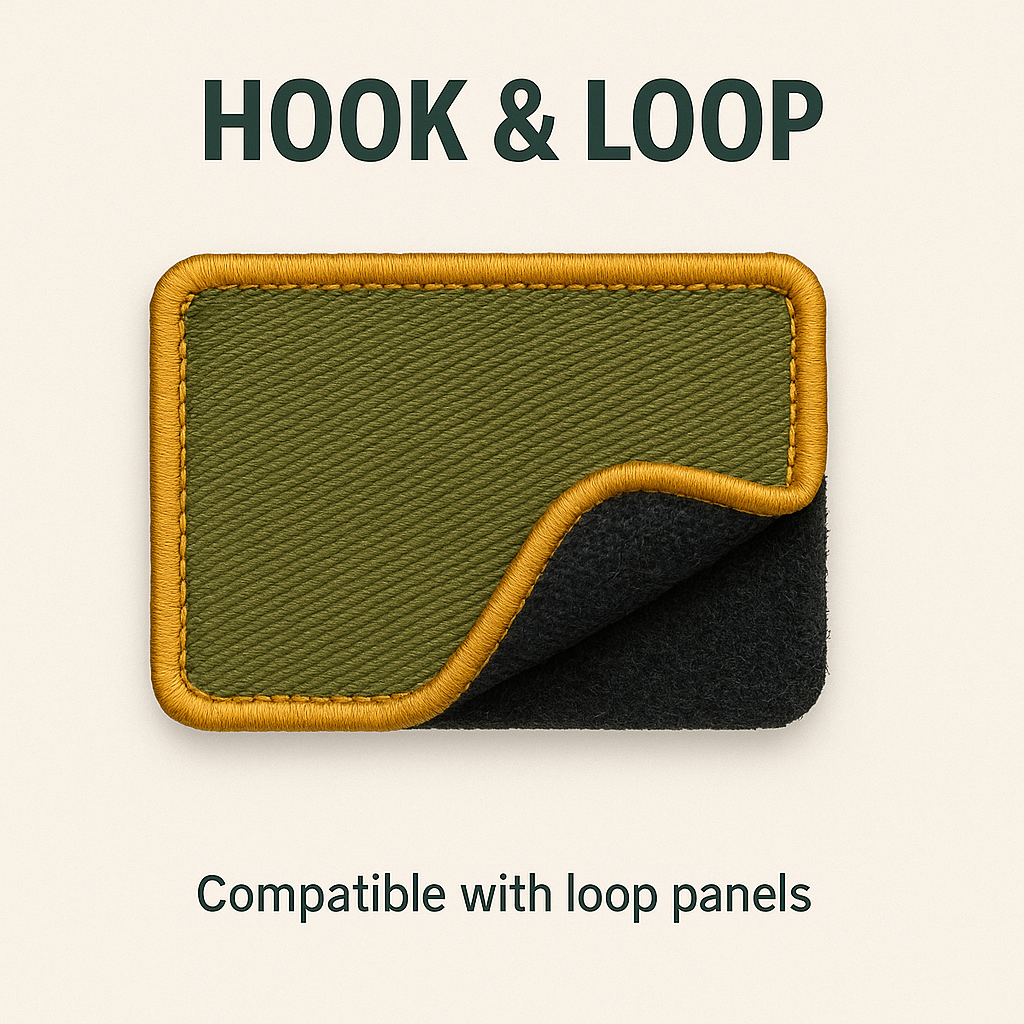
Hook-and-loop backing is useful when patches need to be removable or interchangeable, such as uniforms, security clothing, tactical gear, staff roles, events, clubs, and name badges.
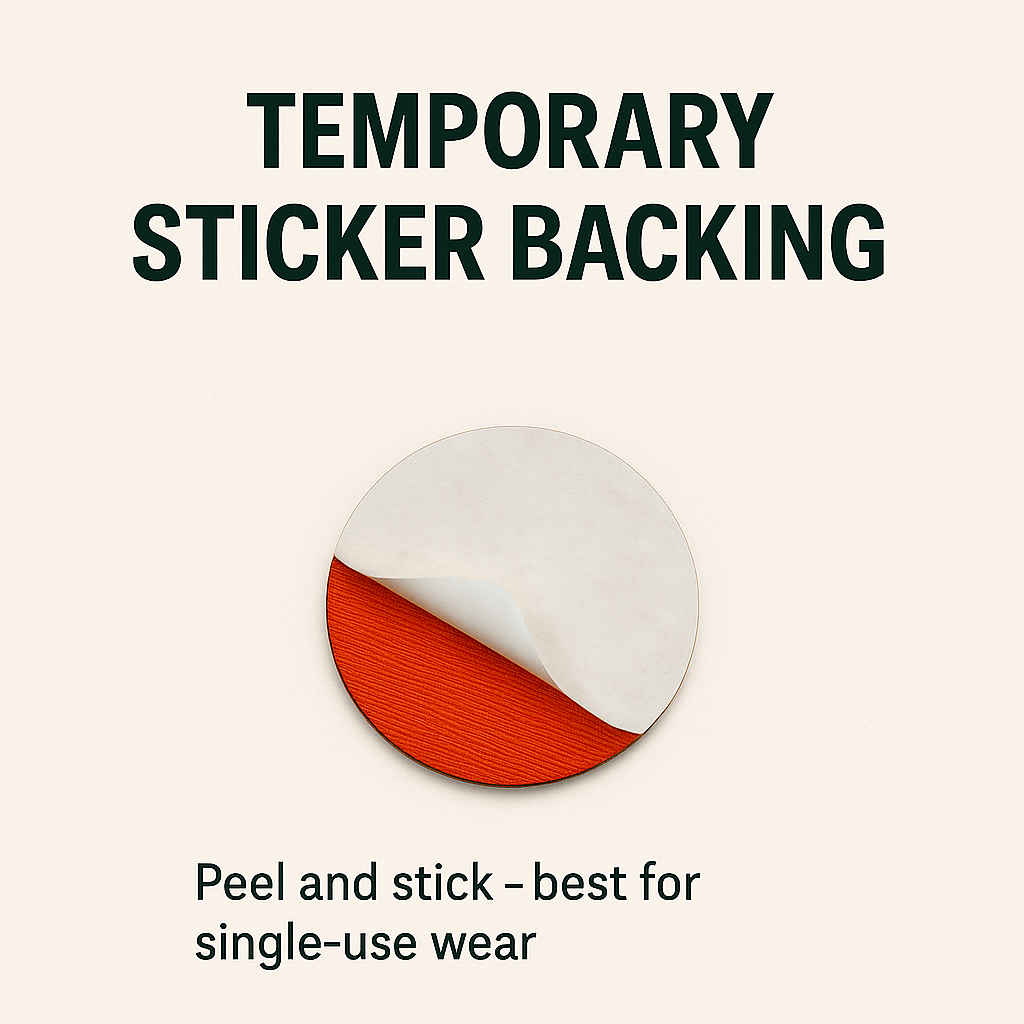
Peel-and-stick backing may be suitable for temporary positioning, presentation, packaging, light-use applications, or surfaces where sewing is not required. It should not be treated as the strongest option for heavy wear, washing, or high-friction areas.
Border And Edge Options
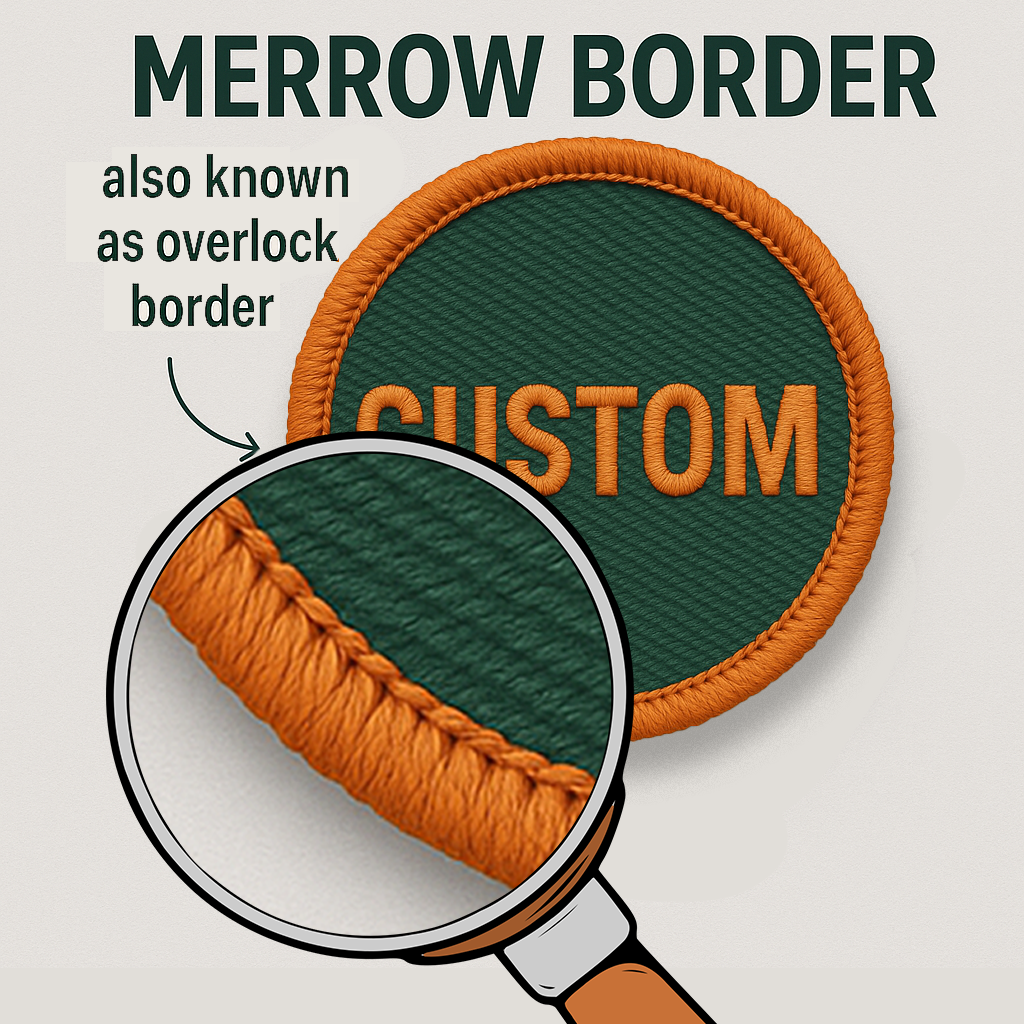
A merrowed border is a thicker overlock border that wraps around both the front and back of the badge. It gives a classic raised edge and works best for regular shapes such as circles, squares, rectangles, shields, and simple ovals. Because the overlock border has to overlap itself to lock, it can leave a small raised bump where the border finishes. For that reason, USA Badge does not generally recommend merrow border with heat seal backing, even though customers sometimes use this combination successfully.
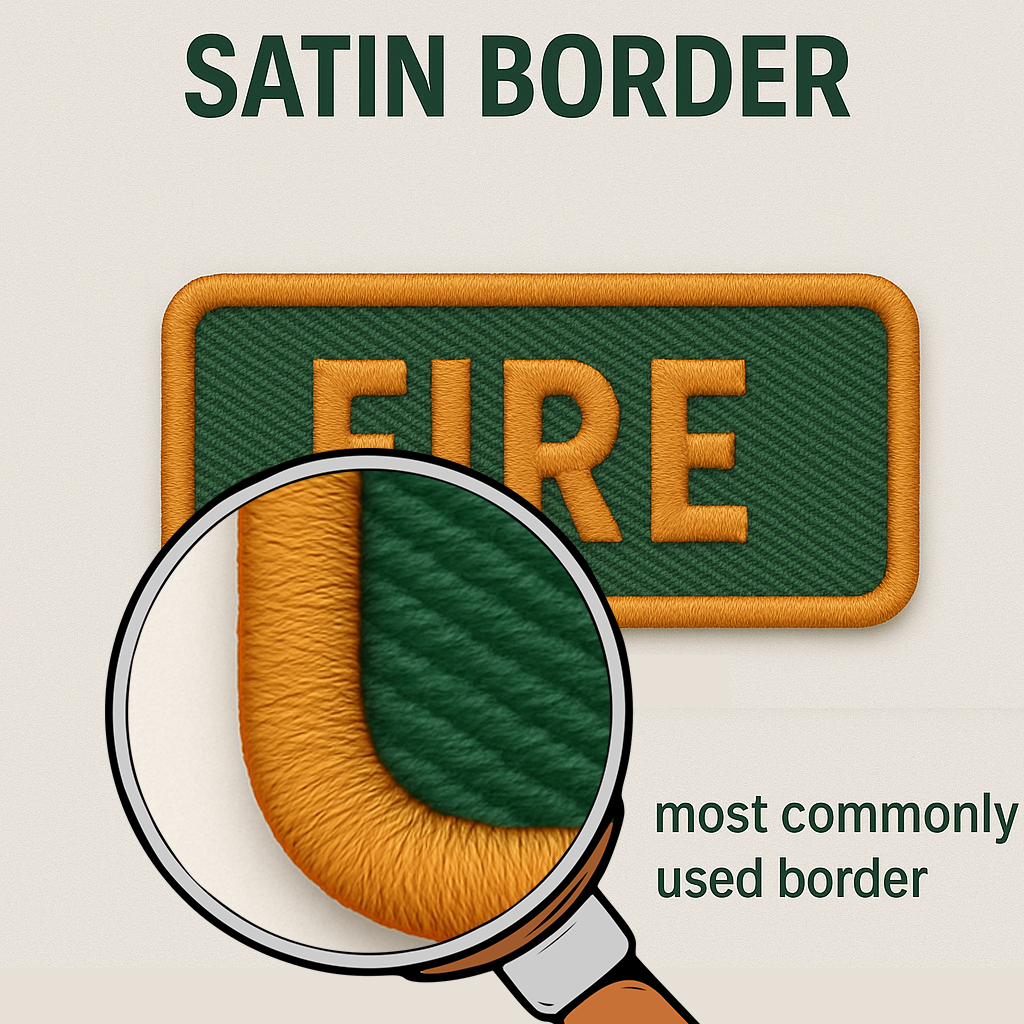
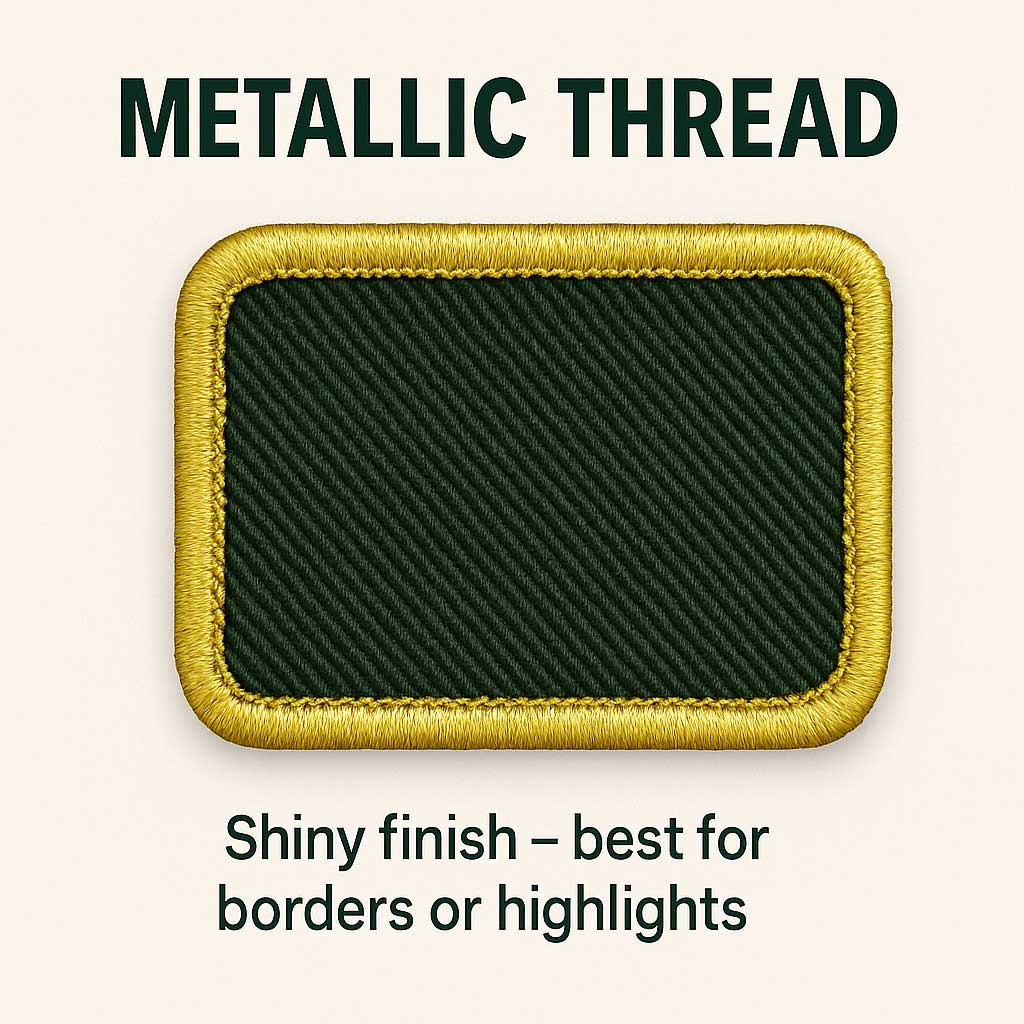
A satin border is a polished embroidered border that gives a cleaner edge and is suitable for more complex shapes. It is also the better border choice for heat seal application because the glue can go right to the edge of the border, helping the patch sit flatter and bond more evenly.
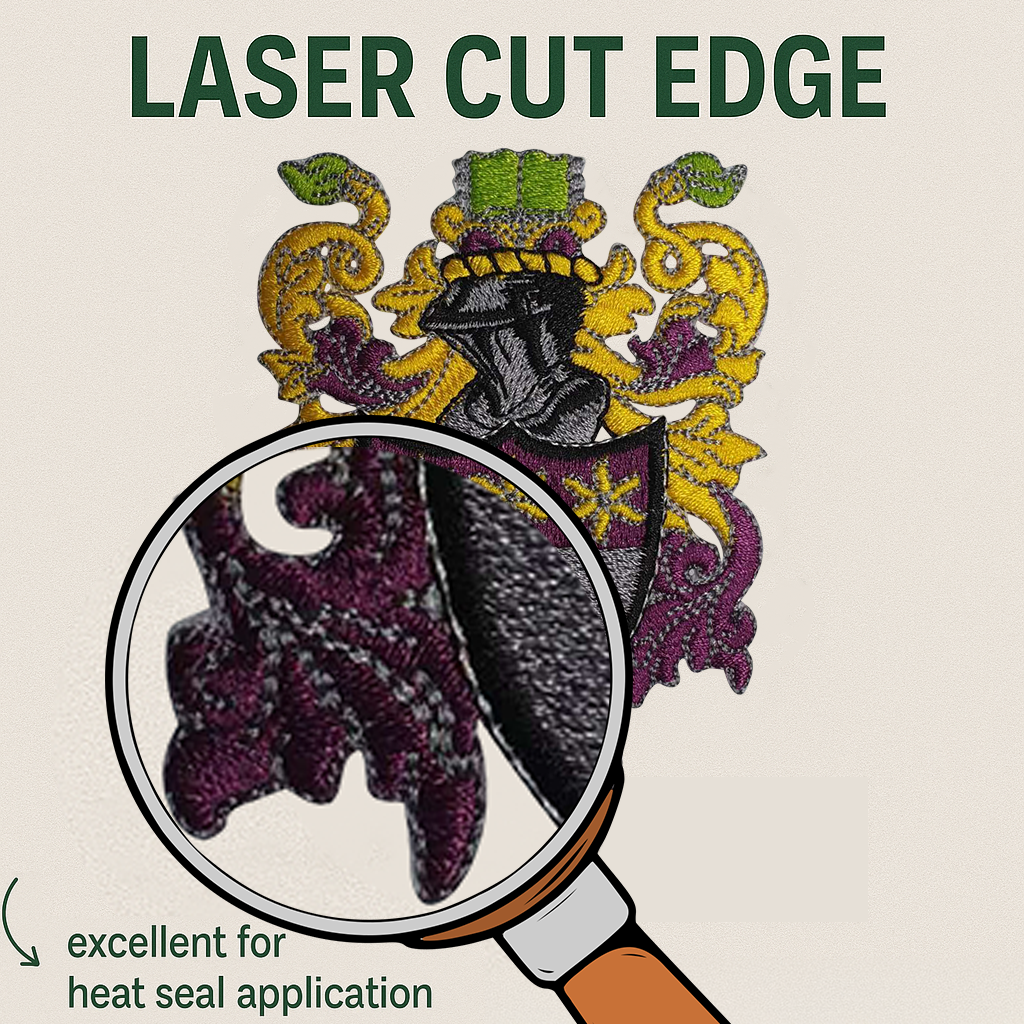
A laser-cut or heat-cut edge without satin or merrow stitching gives a flatter edge. This can work for a select few logos or specialist designs, but most embroidered badges look more finished with either a satin border or a merrow border. If a customer is unsure, satin or merrow should usually be recommended over a plain flat edge.
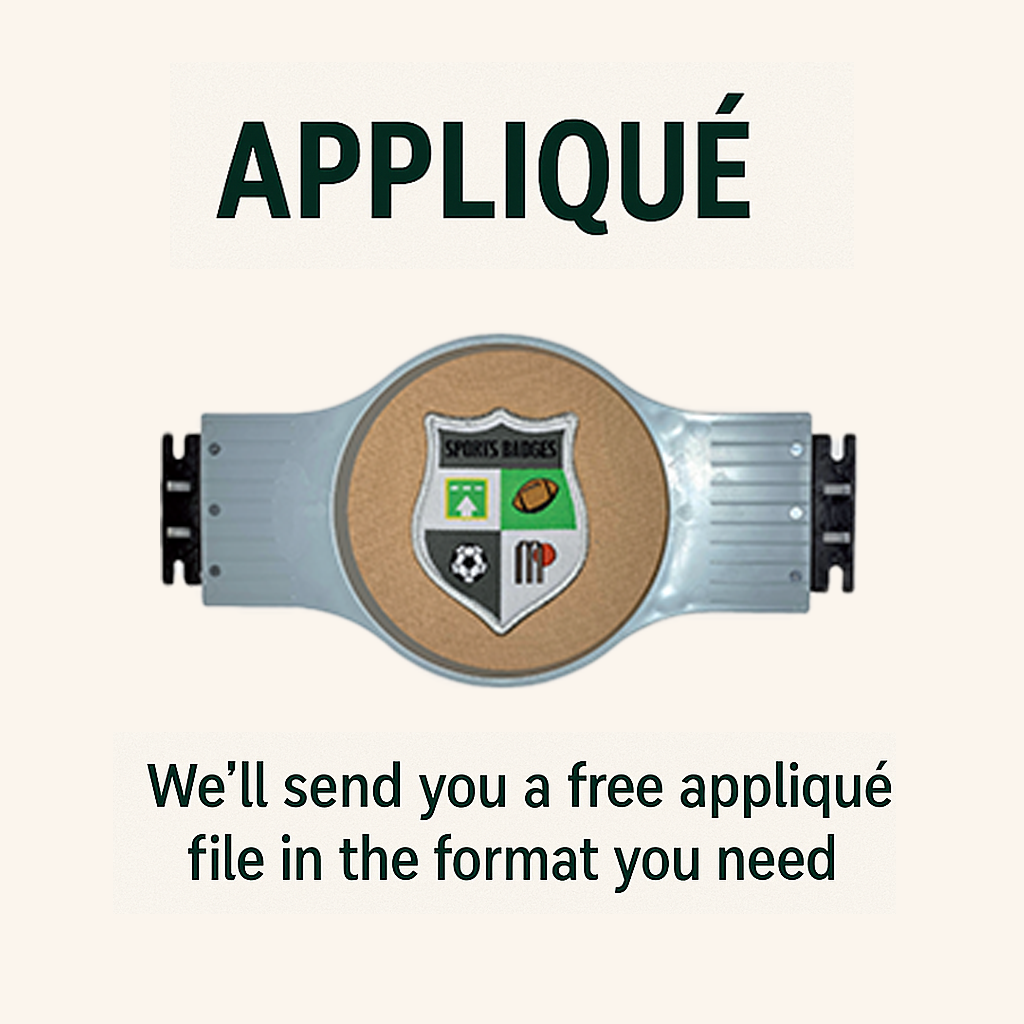
Applique badges are a specialist option. They are usually suitable when the customer has an embroidery machine, access to an embroidery machine, or a supplier who can apply and finish the badge correctly. They should not be presented as the easiest option for a customer who simply wants finished patches ready to use.
Thread Colours And Coverage
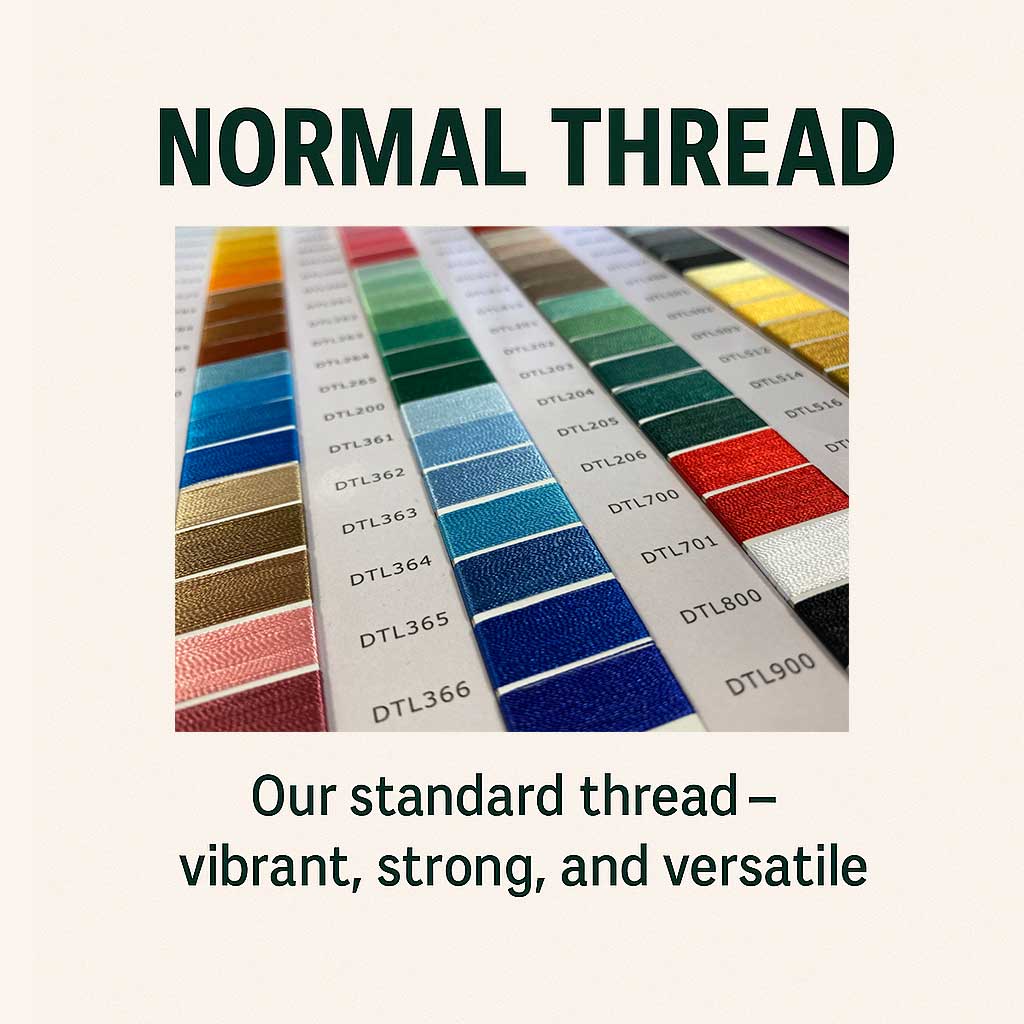
Thread colours are matched as closely as possible to the artwork using available embroidery thread shades. Exact digital screen colours cannot always be matched perfectly in thread, but the mockup helps confirm the intended appearance before production.
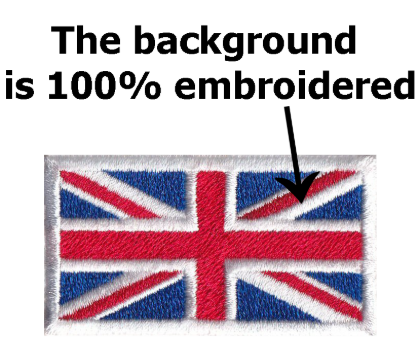
Some embroidered patches use partial embroidery, where part of the fabric base remains visible. Others use high thread coverage for a fuller stitched look. Choosing a base fabric can reduce the amount of embroidery needed, which can also reduce the cost of the design. A 100% embroidered patch gives a fuller stitched finish, but it is not always necessary if a suitable fabric colour can form part of the design.
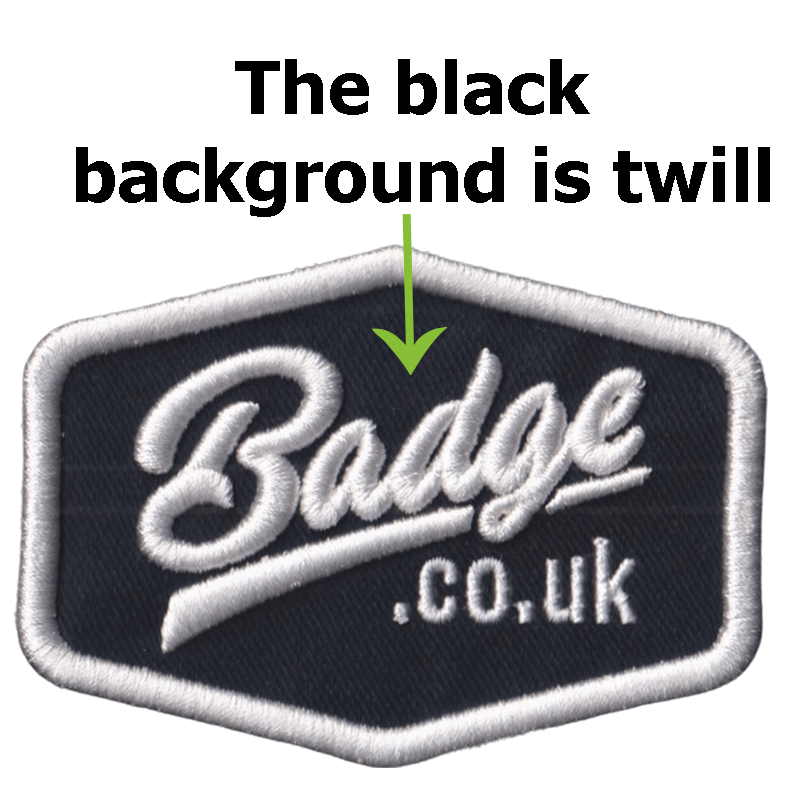
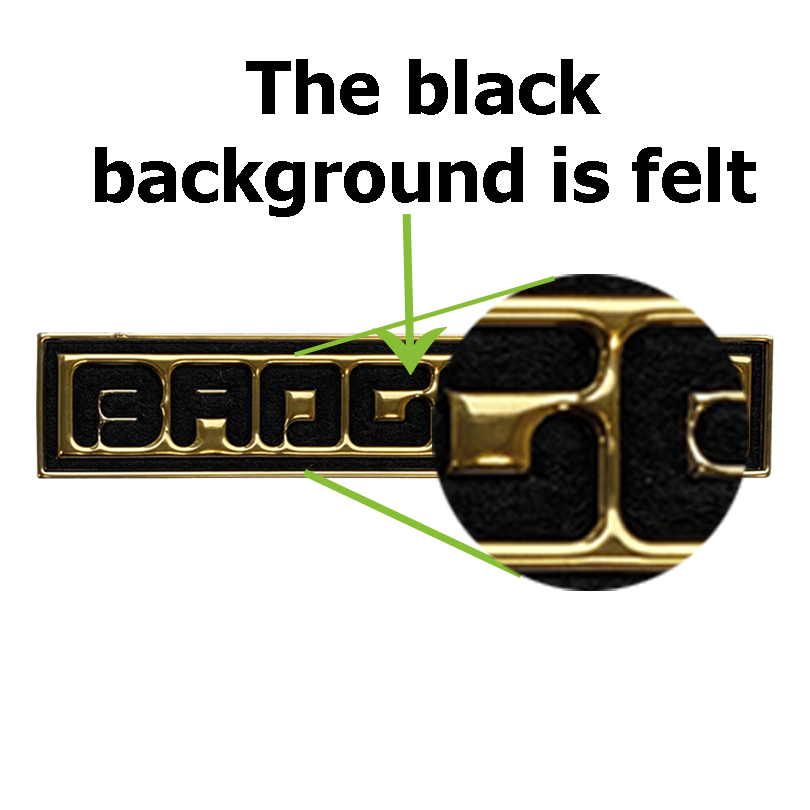
USA Badge stocks a wide range of standard fabric colours, including twill and felt options. The range is not unlimited, but it is consistent and standardized, which is important for predictable production and future reorders. Many suppliers automatically choose a backing fabric if they think it matches the artwork. USA Badge gives the customer the choice because fabric assumptions can go wrong, especially when colour, texture, or brand consistency matters.
The best option depends on the artwork, budget, size, and finish required. If the base fabric can carry part of the design, it may make the patch cleaner and more cost-effective. If the customer wants the whole surface stitched, 100% embroidered is the better choice.
Artwork Guidance
Vector artwork such as AI or PDF is preferred, but high-resolution PNG, JPG, JPEG, GIF, WEBP, EMB, and DST files can also be uploaded for review. Clean artwork with clear outlines, strong shapes, and readable text gives the best embroidery result.
Avoid very small lettering, thin outlines, complex gradients, shadows, photographic details, and tiny colour changes unless you are happy for the design to be simplified. Embroidery is made with thread, so it cannot reproduce every detail in the same way as print. For very fine detail, woven patches or printed patches may be a better option.
Care And Durability
Embroidered patches are designed for everyday use on suitable garments and accessories. For best results, choose the right backing for the item, apply the patch correctly, and follow the garment care instructions. Sew-on patches are usually the safest option for long-term wear and regular washing.
Avoid harsh washing, bleach, high heat, and abrasive cleaning where possible. If using heat seal backing, the garment must be suitable for heat application and the correct professional equipment should be used.
Compare With Other Options
Choose embroidered patches when you want a classic stitched badge with texture, depth, and a traditional finish. Choose woven patches when the artwork has very small text or fine thread detail. Choose printed patches when the design uses gradients, photographs, or full-colour artwork. Choose PVC or silicone patches when you want a raised rubber-style finish, and choose faux leather patches when you want an engraved leather-look alternative.


Embroidered Patches
Drop your file here or click to browse
Supports emb, dst, ai, jpeg, jpg, png, gif, webp, pdf (max 20MB)


Discover our premium collection of Embroidered Patches

Embroidered Patch - Satin Border

Embroidered Patch - Merrow Border

Embroidered Patch - Laser Cut Border
Drag the slider to see the transformation

Product Description
Embroidered patches are one of the most popular and trusted ways to add a logo, badge, crest, name, or design to clothing and accessories. They are made by stitching coloured threads onto a fabric base, giving the patch a traditional raised finish with real texture and depth.
They are ideal for customers who want a durable, professional patch for uniforms, clubs, schools, teams, businesses, events, security wear, workwear, jackets, bags, caps, and merchandise. Embroidery works especially well for bold logos, crests, simple lettering, shapes, emblems, and designs that benefit from a stitched finish.
USA Badge works with experienced production teams that have produced tens of millions of badges over many years and digitized more than a million designs. That experience matters because embroidery is not just about stitching a file; it is about knowing how artwork, thread, fabric, size, backing, border, stitch direction, density, and finishing will behave before the order is made.
The biggest skill is translating your design accurately into what is possible on a real badge. Some details stitch beautifully, some need adjustment, and some are better suited to woven, printed, PVC, or another badge type. Because USA Badge has worked through millions of artwork files and production designs, the team knows what works, what fails, and how to guide the customer before production begins.
Each embroidered patch is custom made from your artwork. After you upload your design and choose the size, quantity, backing, fabric, colours, and finish, USA Badge reviews the artwork and prepares a free digital mockup with a confirmed quote. After mockup approval, a production sample photograph is also provided for approval before the full order is completed. This two-step approval system is designed to catch issues before they move through production.
Embroidery is best for designs with clear shapes, readable text, and strong colour areas. Very small lettering, fine lines, gradients, shadows, and photographic details may need to be simplified so the stitching remains clean and legible. If your artwork is not production ready, USA Badge will review it and advise what needs to be adjusted before production.
Best Uses
- Uniform badges and workwear patches
- School, college, and club badges
- Sports team patches
- Scout, cadet, martial arts, and organisation badges
- Security, service, and event staff patches
- Jacket, hoodie, cap, and bag branding
- Corporate and promotional merchandise
- Motorcycle, lifestyle, and community patches
- Name, rank, role, and department patches
Backing Options
No backing is best when the patch will be sewn directly onto a garment, bag, cap, or accessory. It is often the most reliable choice for long-term use, heavy garments, uniforms, and items that may be washed regularly.
Heat seal backing can be used for compatible heat-press application. It is useful when the garment and equipment are suitable, but it should be applied with the correct heat, pressure, and timing. Some fabrics, coatings, waterproof finishes, or delicate garments may not be suitable for heat application. For heat seal orders, the border choice matters: satin border is usually a better option than merrow border because the adhesive can reach right to the edge.
Hook-and-loop backing is useful when patches need to be removable or interchangeable, such as uniforms, security clothing, tactical gear, staff roles, events, clubs, and name badges.
Peel-and-stick backing may be suitable for temporary positioning, presentation, packaging, light-use applications, or surfaces where sewing is not required. It should not be treated as the strongest option for heavy wear, washing, or high-friction areas.
Border And Edge Options
A merrowed border is a thicker overlock border that wraps around both the front and back of the badge. It gives a classic raised edge and works best for regular shapes such as circles, squares, rectangles, shields, and simple ovals. Because the overlock border has to overlap itself to lock, it can leave a small raised bump where the border finishes. For that reason, USA Badge does not generally recommend merrow border with heat seal backing, even though customers sometimes use this combination successfully.
A satin border is a polished embroidered border that gives a cleaner edge and is suitable for more complex shapes. It is also the better border choice for heat seal application because the glue can go right to the edge of the border, helping the patch sit flatter and bond more evenly.
A laser-cut or heat-cut edge without satin or merrow stitching gives a flatter edge. This can work for a select few logos or specialist designs, but most embroidered badges look more finished with either a satin border or a merrow border. If a customer is unsure, satin or merrow should usually be recommended over a plain flat edge.
Applique badges are a specialist option. They are usually suitable when the customer has an embroidery machine, access to an embroidery machine, or a supplier who can apply and finish the badge correctly. They should not be presented as the easiest option for a customer who simply wants finished patches ready to use.
Thread Colours And Coverage
Thread colours are matched as closely as possible to the artwork using available embroidery thread shades. Exact digital screen colours cannot always be matched perfectly in thread, but the mockup helps confirm the intended appearance before production.
Some embroidered patches use partial embroidery, where part of the fabric base remains visible. Others use high thread coverage for a fuller stitched look. Choosing a base fabric can reduce the amount of embroidery needed, which can also reduce the cost of the design. A 100% embroidered patch gives a fuller stitched finish, but it is not always necessary if a suitable fabric colour can form part of the design.
USA Badge stocks a wide range of standard fabric colours, including twill and felt options. The range is not unlimited, but it is consistent and standardized, which is important for predictable production and future reorders. Many suppliers automatically choose a backing fabric if they think it matches the artwork. USA Badge gives the customer the choice because fabric assumptions can go wrong, especially when colour, texture, or brand consistency matters.
The best option depends on the artwork, budget, size, and finish required. If the base fabric can carry part of the design, it may make the patch cleaner and more cost-effective. If the customer wants the whole surface stitched, 100% embroidered is the better choice.
Artwork Guidance
Vector artwork such as AI or PDF is preferred, but high-resolution PNG, JPG, JPEG, GIF, WEBP, EMB, and DST files can also be uploaded for review. Clean artwork with clear outlines, strong shapes, and readable text gives the best embroidery result.
Avoid very small lettering, thin outlines, complex gradients, shadows, photographic details, and tiny colour changes unless you are happy for the design to be simplified. Embroidery is made with thread, so it cannot reproduce every detail in the same way as print. For very fine detail, woven patches or printed patches may be a better option.
Care And Durability
Embroidered patches are designed for everyday use on suitable garments and accessories. For best results, choose the right backing for the item, apply the patch correctly, and follow the garment care instructions. Sew-on patches are usually the safest option for long-term wear and regular washing.
Avoid harsh washing, bleach, high heat, and abrasive cleaning where possible. If using heat seal backing, the garment must be suitable for heat application and the correct professional equipment should be used.
Compare With Other Options
Choose embroidered patches when you want a classic stitched badge with texture, depth, and a traditional finish. Choose woven patches when the artwork has very small text or fine thread detail. Choose printed patches when the design uses gradients, photographs, or full-colour artwork. Choose PVC or silicone patches when you want a raised rubber-style finish, and choose faux leather patches when you want an engraved leather-look alternative.