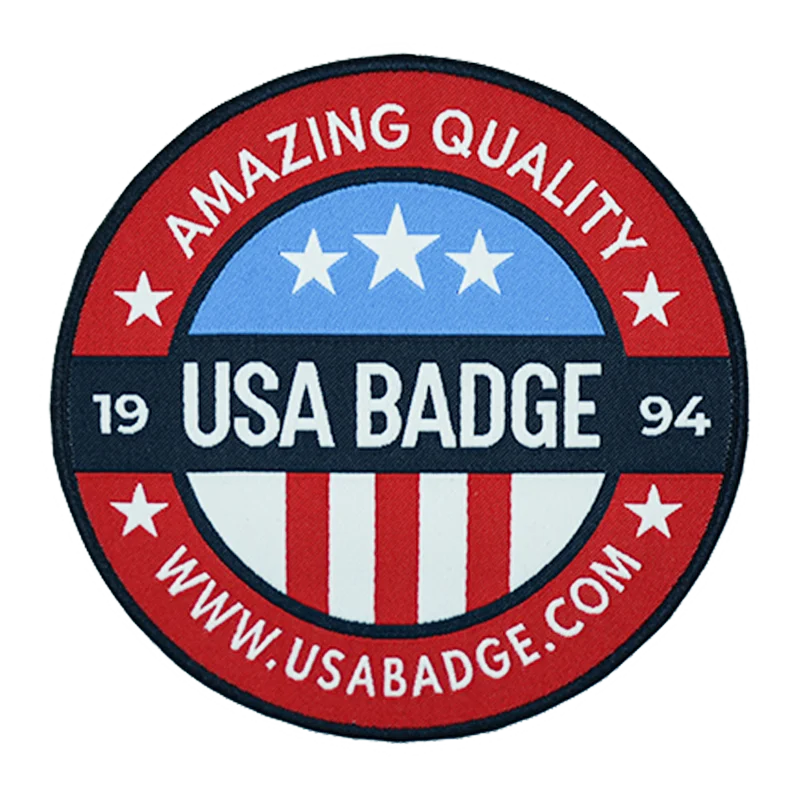


Product Description
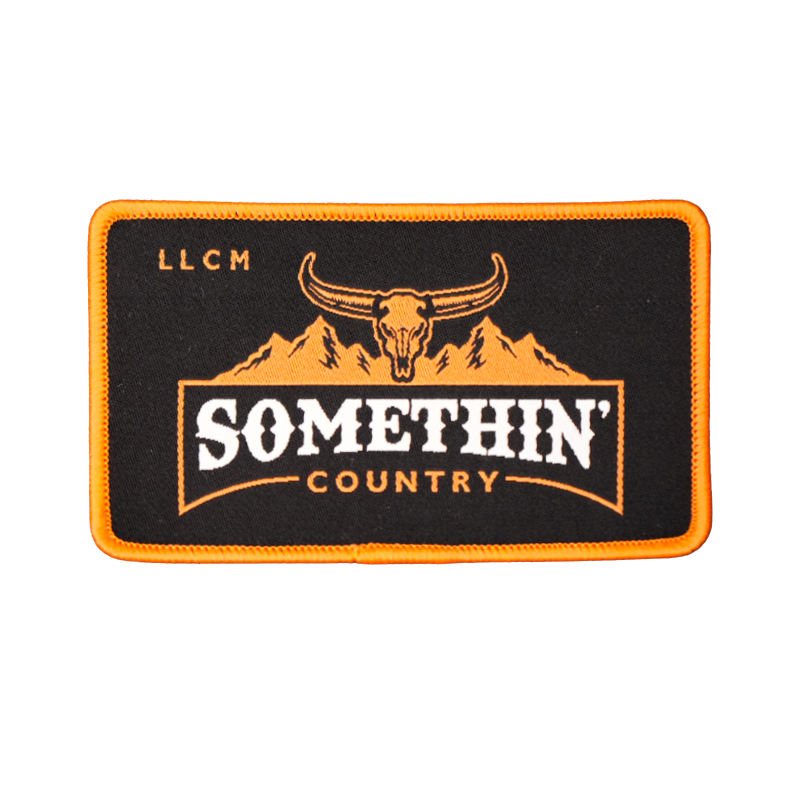
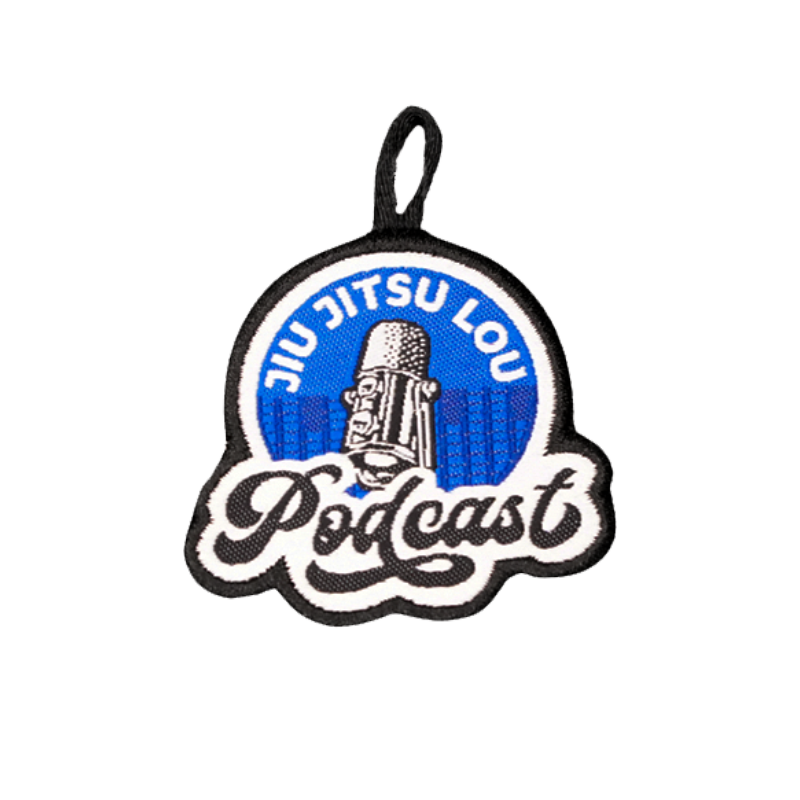
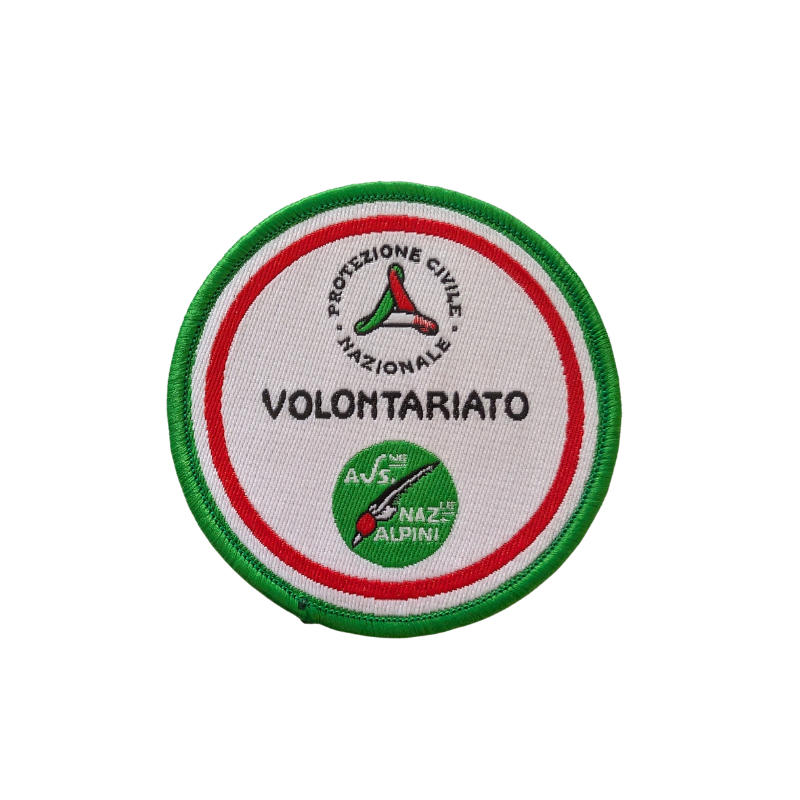
Woven patches are made by weaving fine threads together to create the design directly in the patch. Unlike embroidered patches, where thread is stitched on top of a fabric base, woven patches have a smoother and flatter surface. This allows them to show finer detail, smaller text, cleaner lines, and more precise artwork than traditional embroidery.
The background fabric and the design are produced at the same time. The badge is literally woven with the design, rather than being stitched onto a separate fabric afterwards. This is one of the reasons woven badges can look so clean and flat.
The detail is important, but it is not the only reason to choose woven. One of the biggest advantages is comfort and light wear performance. When two designs are otherwise suitable for both woven and embroidered production, woven is often the better choice if the customer wants the badge to sit flatter, feel lighter, and add less bulk to the garment.
Woven patches are a strong choice for uniforms, fashion labels, brand badges, school badges, corporate logos, sports clubs, merchandise, sleeve patches, and any design where clarity and a flatter finish matter. They work especially well when the artwork includes small lettering, fine outlines, detailed crests, or clean brand marks that may become too bulky or unclear in embroidery.
USA Badge works with experienced production teams that have produced tens of millions of badges and digitized more than a million designs. That experience matters because woven production is about translating artwork into thread in a way that stays readable, balanced, and suitable for the final product. If a design would work better as embroidered, printed, PVC, or another badge type, USA Badge can advise before production begins.
Each order is custom made from your artwork. After you upload your design and choose the size, quantity, backing, thread colours, and border, USA Badge reviews the artwork and prepares a free digital mockup with a confirmed quote. After mockup approval, a production sample photograph is supplied for approval before the full order is completed.
Woven badges are produced on jacquard looms, which are typically around 1 to 1.5 metres wide. Because the loom produces rows of woven badges across the fabric width, the setup is different from embroidery. A small order of 25 pieces can take the same loom setup as 100 pieces, and the first row or first few rows may be used to get the design and production settings right. This is why woven patch minimums are normally higher than embroidered patch minimums.
Best Uses
- Lightweight garment badges
- Uniform patches where comfort matters
- Small text and detailed logos
- School, club, and organisation badges
- Fashion labels and merchandise
- Corporate branding patches
- Sleeve patches and chest badges
- Sports team and event patches
- Detailed crests and fine-line artwork
Woven vs Embroidered Patches
Choose woven patches when you need fine detail, small text, clean lines, and a flatter, lighter badge. Woven badges are less bulky than embroidered patches, which makes them better for light wear and garments where comfort or flexibility matters.
Choose embroidered patches when you want a thicker, raised, stitched texture and a traditional badge look. Embroidery gives more depth and texture, but it can become bulky on detailed designs or smaller garment areas.
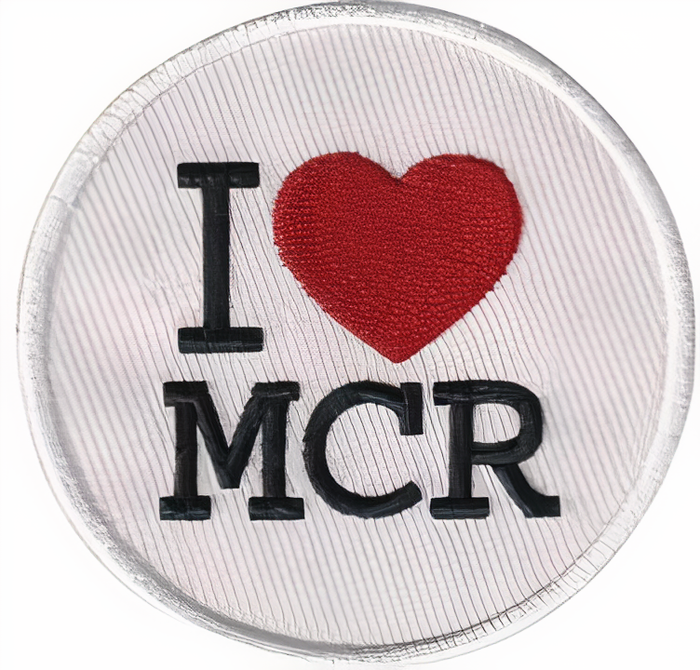
There is another important production difference that most comparison guides miss. With embroidered badges, stitch directions can change across different parts of the design. This helps create shape, texture, highlights, and a more dimensional stitched look. With woven badges, the weave runs in the same direction across the badge, even if the design itself is detailed. That is why woven badges look smoother, flatter, and cleaner, while embroidered badges look more raised, textured, and directional.
In simple terms: embroidered patches give texture and stitch direction; woven patches give clarity, flatness, and lighter wear.
Backing Options
Heat seal backing can be used for compatible heat-press application when the garment and equipment are suitable. It should be applied with the correct heat, pressure, and timing.
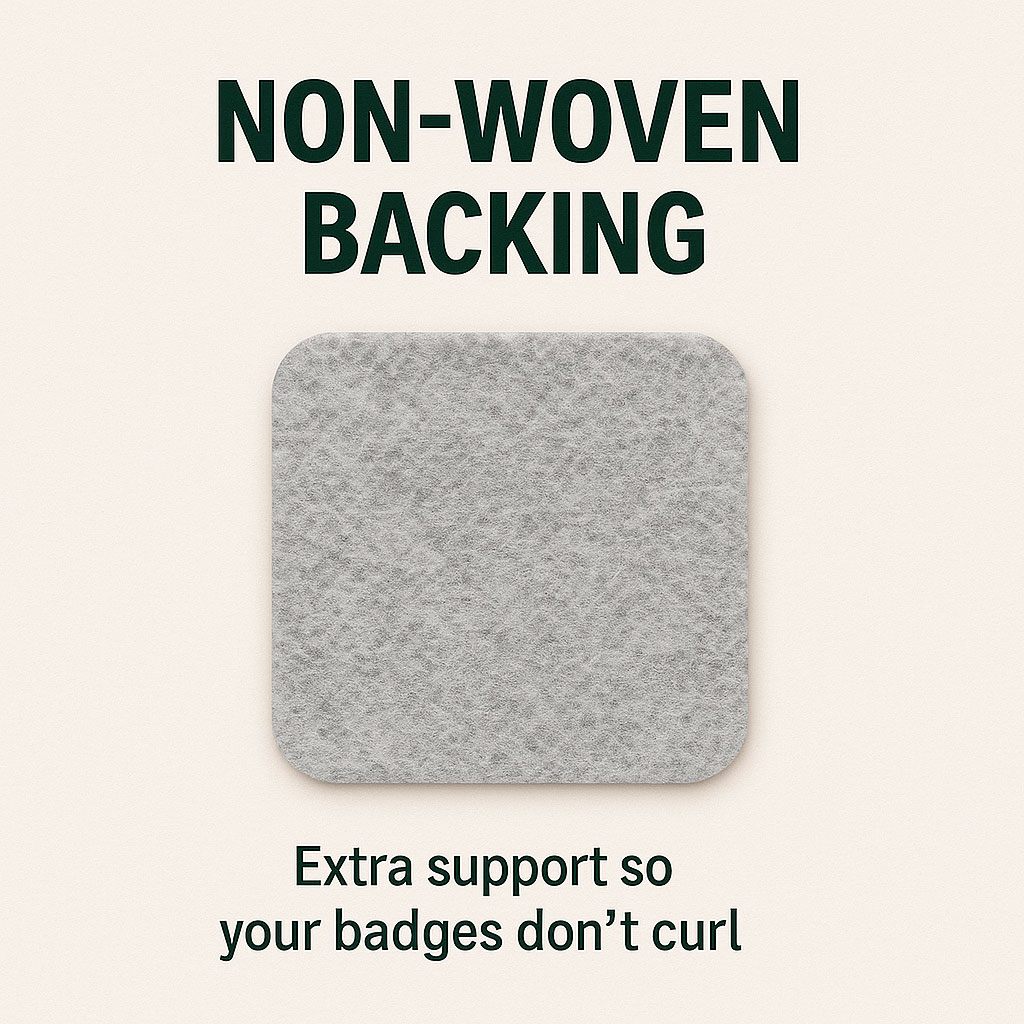
Non woven backing gives structure and stability to the patch and can be useful depending on the garment, application, and finish required. For applique work, USA Badge generally recommends non woven backing because it keeps the badge a little stronger and stiffer, helping it emblem and apply more cleanly.
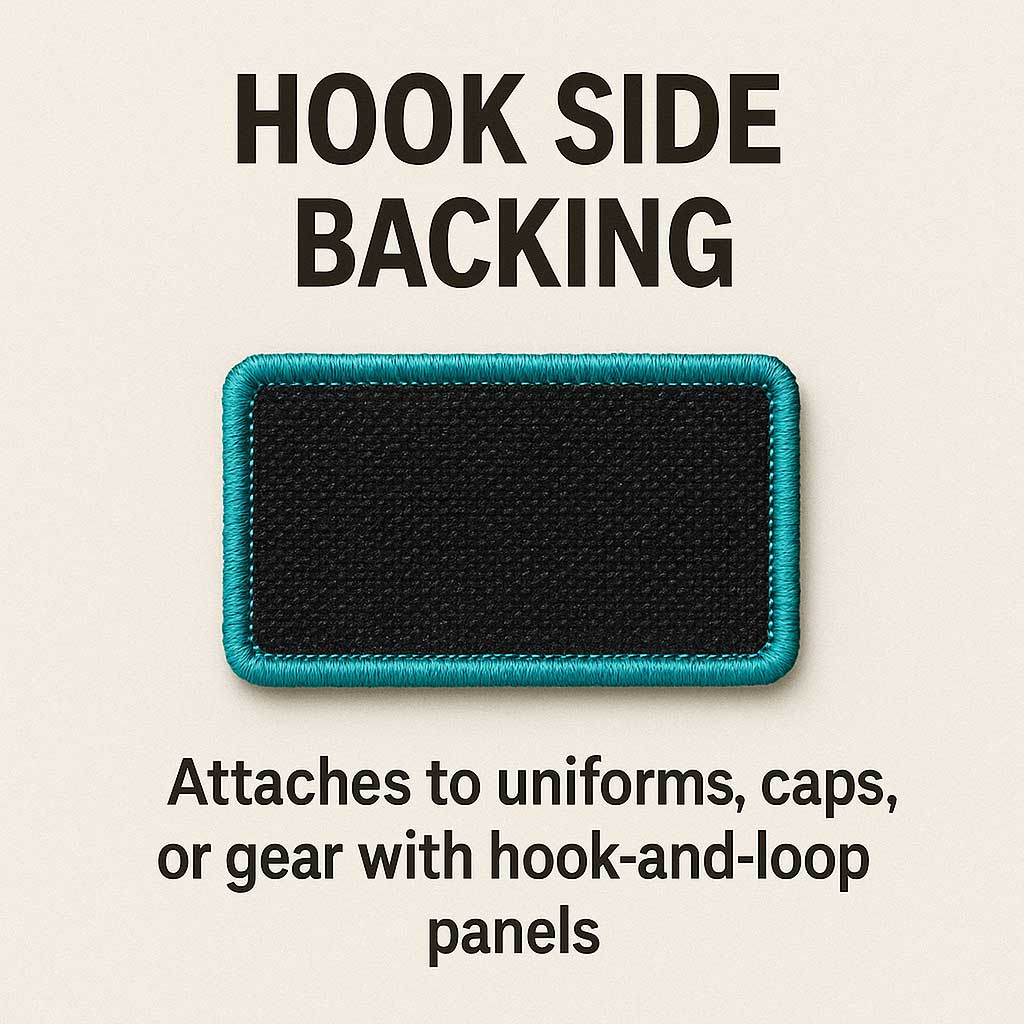
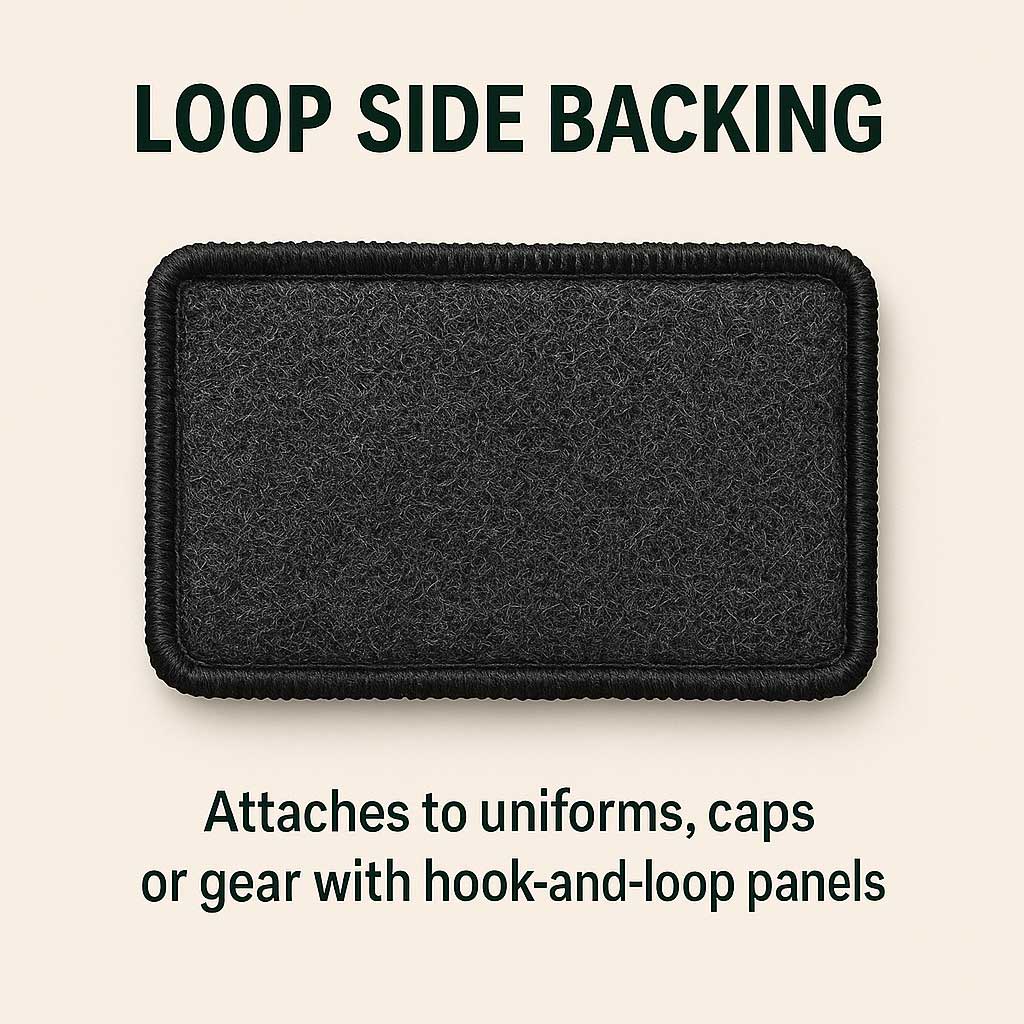
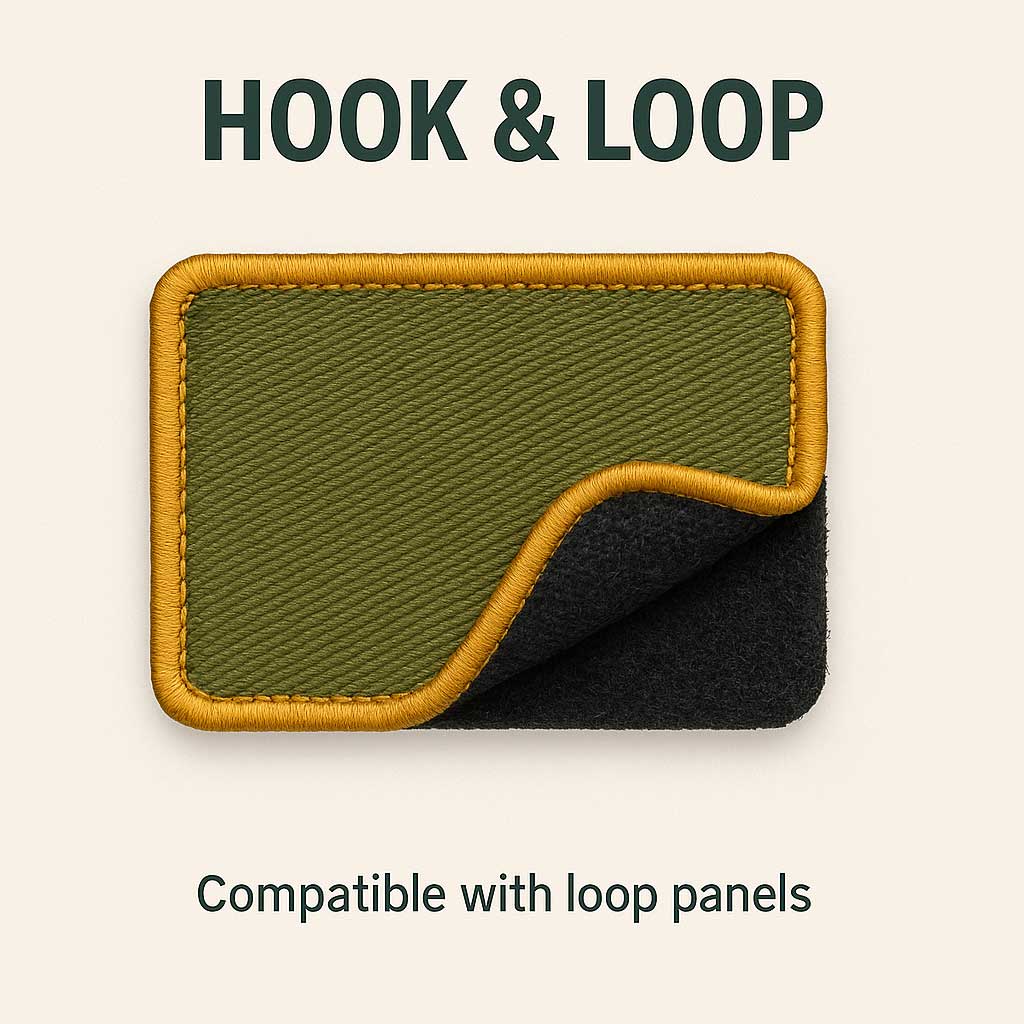
Velcro hook, loop, or both-side backing is best when the badge needs to be removable or interchangeable, such as uniforms, roles, events, tactical-style garments, staff badges, or reusable patches.
If the customer wants the most secure long-term finish on garments that will be washed or worn regularly, sew-on application should be considered where available.
Border And Edge Options
A satin border gives a clean stitched edge and works well for many woven badge shapes, including more complex outlines.
A satin border is also usually the better choice for heat seal application because the adhesive can reach right to the edge and the patch can sit flatter.
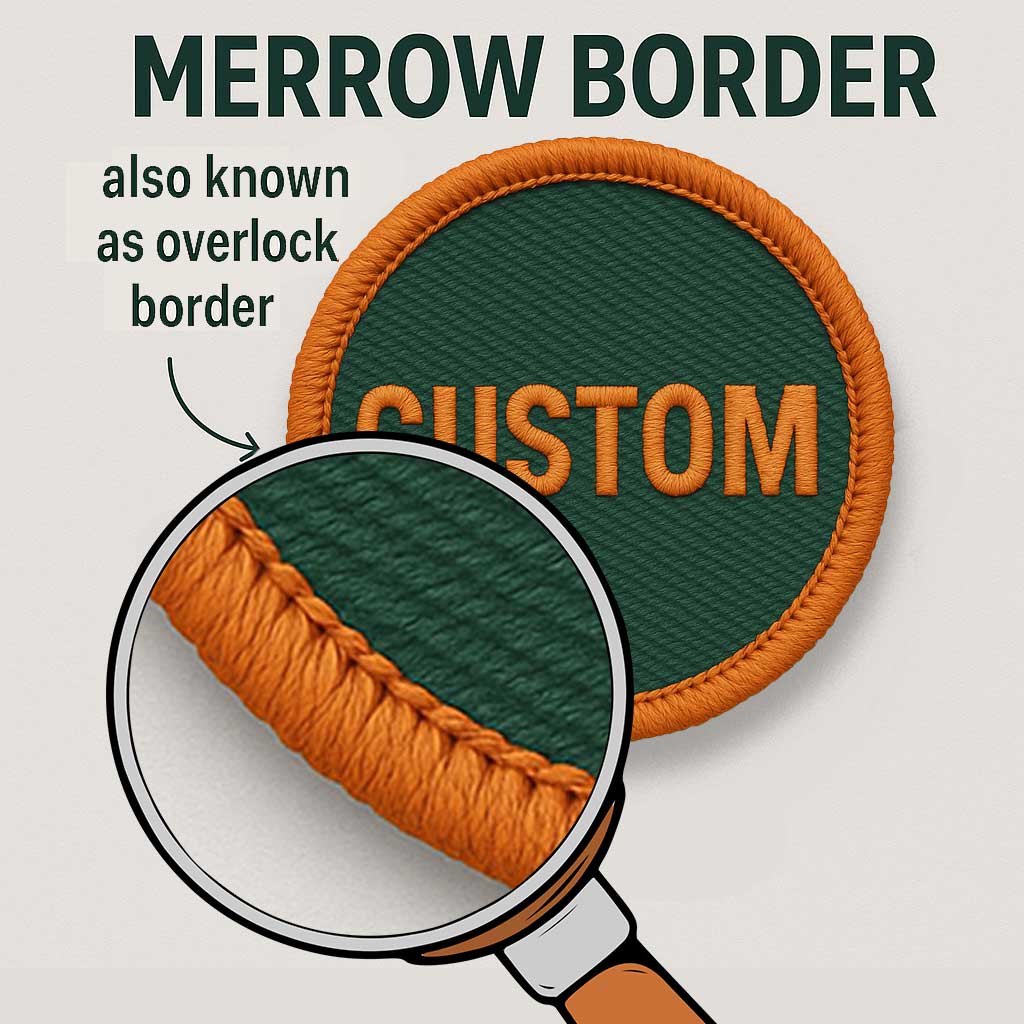
A merrow border gives a thicker traditional overlock edge. It may be suitable for simple shapes, but it adds more bulk than a satin edge. As with embroidered patches, USA Badge does not generally recommend merrow border with heat seal backing because the overlock finish can create a raised lock point.
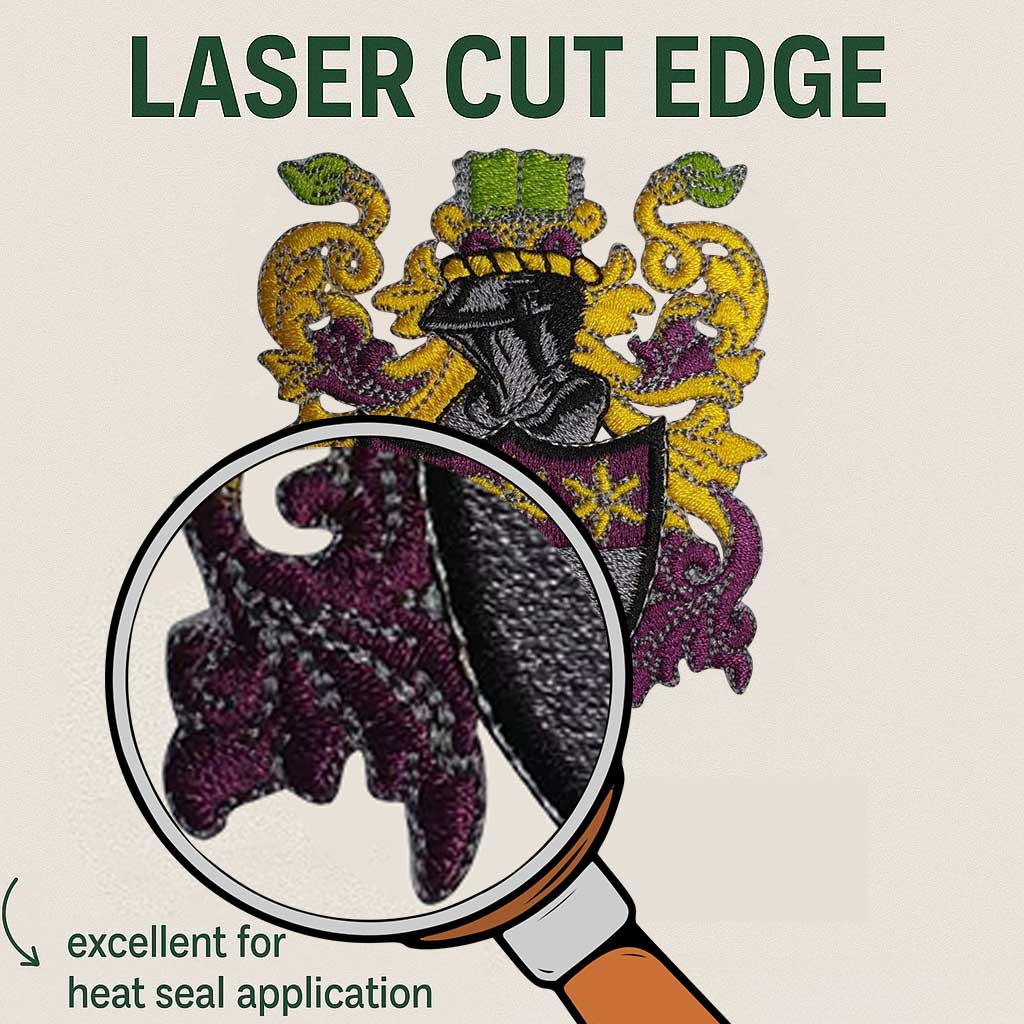
A laser-cut or heat-cut edge gives a flatter finish and may suit selected designs, but many badges still look more finished with a satin or merrow border.
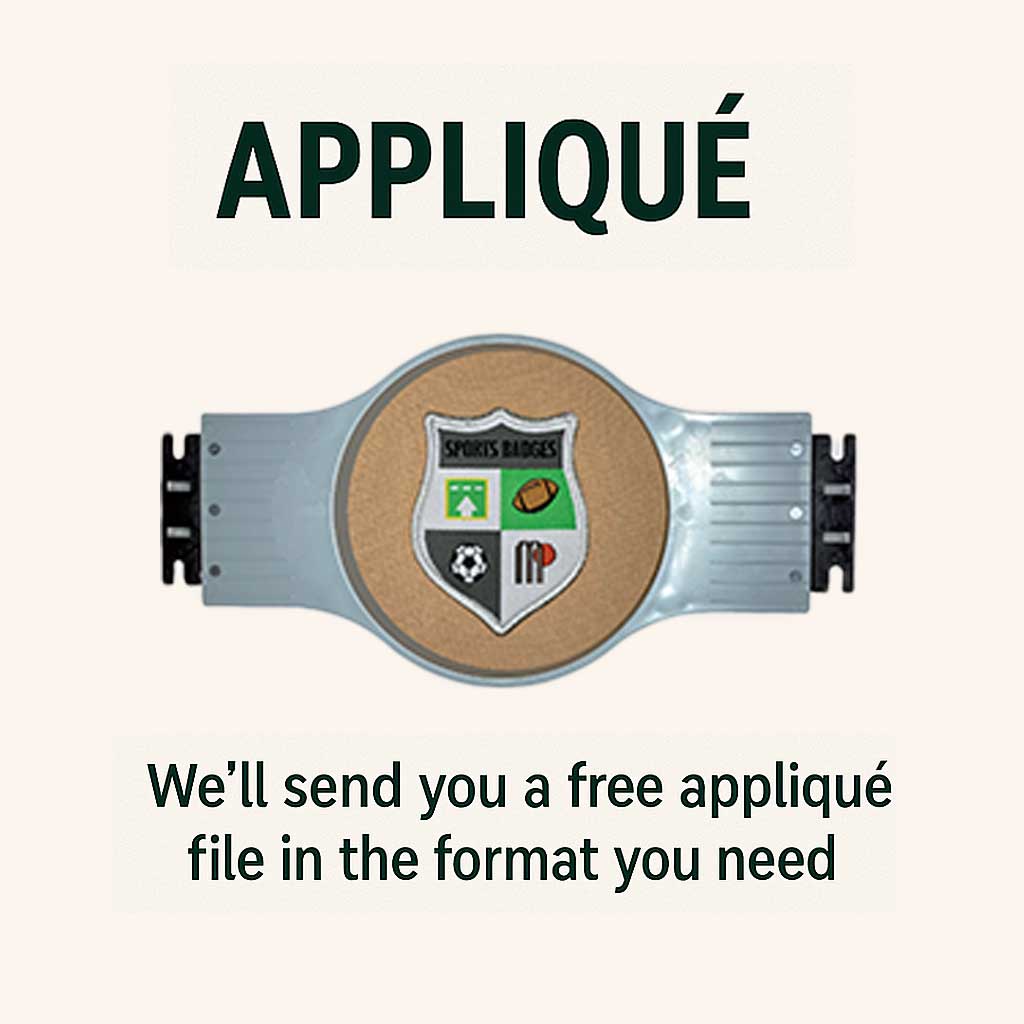
Applique is a specialist option and should only be chosen when the customer has the right embroidery setup or supplier support to apply and finish it correctly.
Artwork Guidance
Woven patches are excellent for fine detail, but they are still made with thread. Clean vector artwork such as AI or PDF is preferred. High-resolution PNG, JPG, JPEG, GIF, WEBP, EMB, and DST files can also be uploaded for review.
Woven is usually better than embroidery for small text, fine outlines, detailed crests, and flat brand marks. However, extremely tiny lettering, very fine spacing, complex gradients, photographic artwork, shading, and subtle colour blends may still need adjustment. Because all the weave runs in one direction, woven badges do not reproduce shading and blending in the same way as print. For artwork with gradients, shading, photographic effects, or complex colour blending, USA Badge may recommend sublimation badges or Subli Stitch badges instead.
Care And Durability
Woven patches are designed for a smooth, flexible, lightweight finish on suitable garments and accessories. For best results, choose the correct backing and application method for the garment. Avoid harsh washing, bleach, high heat, and abrasive cleaning where possible.
If heat seal backing is used, the garment must be suitable for heat application and the correct professional equipment should be used.
Compare With Other Options
Choose woven patches for small text, fine detail, clean lines, and lighter wear. Choose embroidered patches for a raised stitched texture, directional stitches, and a classic badge look. Choose sublimation or Subli Stitch badges for shading, blending, gradients, or artwork that needs a printed effect with badge finishing. Choose PVC or silicone patches for a raised rubber-style finish, and choose faux leather patches for an engraved leather-look alternative.


Woven Patches
Drop your file here or click to browse
Supports emb, dst, ai, jpeg, jpg, png, gif, webp, pdf (max 20MB)


Discover our premium collection of Woven Patches
Woven Badges

Woven Badges

Woven Badges
Drag the slider to see the transformation

Product Description
Woven patches are made by weaving fine threads together to create the design directly in the patch. Unlike embroidered patches, where thread is stitched on top of a fabric base, woven patches have a smoother and flatter surface. This allows them to show finer detail, smaller text, cleaner lines, and more precise artwork than traditional embroidery.
The background fabric and the design are produced at the same time. The badge is literally woven with the design, rather than being stitched onto a separate fabric afterwards. This is one of the reasons woven badges can look so clean and flat.
The detail is important, but it is not the only reason to choose woven. One of the biggest advantages is comfort and light wear performance. When two designs are otherwise suitable for both woven and embroidered production, woven is often the better choice if the customer wants the badge to sit flatter, feel lighter, and add less bulk to the garment.
Woven patches are a strong choice for uniforms, fashion labels, brand badges, school badges, corporate logos, sports clubs, merchandise, sleeve patches, and any design where clarity and a flatter finish matter. They work especially well when the artwork includes small lettering, fine outlines, detailed crests, or clean brand marks that may become too bulky or unclear in embroidery.
USA Badge works with experienced production teams that have produced tens of millions of badges and digitized more than a million designs. That experience matters because woven production is about translating artwork into thread in a way that stays readable, balanced, and suitable for the final product. If a design would work better as embroidered, printed, PVC, or another badge type, USA Badge can advise before production begins.
Each order is custom made from your artwork. After you upload your design and choose the size, quantity, backing, thread colours, and border, USA Badge reviews the artwork and prepares a free digital mockup with a confirmed quote. After mockup approval, a production sample photograph is supplied for approval before the full order is completed.
Woven badges are produced on jacquard looms, which are typically around 1 to 1.5 metres wide. Because the loom produces rows of woven badges across the fabric width, the setup is different from embroidery. A small order of 25 pieces can take the same loom setup as 100 pieces, and the first row or first few rows may be used to get the design and production settings right. This is why woven patch minimums are normally higher than embroidered patch minimums.
Best Uses
- Lightweight garment badges
- Uniform patches where comfort matters
- Small text and detailed logos
- School, club, and organisation badges
- Fashion labels and merchandise
- Corporate branding patches
- Sleeve patches and chest badges
- Sports team and event patches
- Detailed crests and fine-line artwork
Woven vs Embroidered Patches
Choose woven patches when you need fine detail, small text, clean lines, and a flatter, lighter badge. Woven badges are less bulky than embroidered patches, which makes them better for light wear and garments where comfort or flexibility matters.
Choose embroidered patches when you want a thicker, raised, stitched texture and a traditional badge look. Embroidery gives more depth and texture, but it can become bulky on detailed designs or smaller garment areas.
There is another important production difference that most comparison guides miss. With embroidered badges, stitch directions can change across different parts of the design. This helps create shape, texture, highlights, and a more dimensional stitched look. With woven badges, the weave runs in the same direction across the badge, even if the design itself is detailed. That is why woven badges look smoother, flatter, and cleaner, while embroidered badges look more raised, textured, and directional.
In simple terms: embroidered patches give texture and stitch direction; woven patches give clarity, flatness, and lighter wear.
Backing Options
Heat seal backing can be used for compatible heat-press application when the garment and equipment are suitable. It should be applied with the correct heat, pressure, and timing.
Non woven backing gives structure and stability to the patch and can be useful depending on the garment, application, and finish required. For applique work, USA Badge generally recommends non woven backing because it keeps the badge a little stronger and stiffer, helping it emblem and apply more cleanly.
Velcro hook, loop, or both-side backing is best when the badge needs to be removable or interchangeable, such as uniforms, roles, events, tactical-style garments, staff badges, or reusable patches.
If the customer wants the most secure long-term finish on garments that will be washed or worn regularly, sew-on application should be considered where available.
Border And Edge Options
A satin border gives a clean stitched edge and works well for many woven badge shapes, including more complex outlines.
A satin border is also usually the better choice for heat seal application because the adhesive can reach right to the edge and the patch can sit flatter.
A merrow border gives a thicker traditional overlock edge. It may be suitable for simple shapes, but it adds more bulk than a satin edge. As with embroidered patches, USA Badge does not generally recommend merrow border with heat seal backing because the overlock finish can create a raised lock point.
A laser-cut or heat-cut edge gives a flatter finish and may suit selected designs, but many badges still look more finished with a satin or merrow border.
Applique is a specialist option and should only be chosen when the customer has the right embroidery setup or supplier support to apply and finish it correctly.
Artwork Guidance
Woven patches are excellent for fine detail, but they are still made with thread. Clean vector artwork such as AI or PDF is preferred. High-resolution PNG, JPG, JPEG, GIF, WEBP, EMB, and DST files can also be uploaded for review.
Woven is usually better than embroidery for small text, fine outlines, detailed crests, and flat brand marks. However, extremely tiny lettering, very fine spacing, complex gradients, photographic artwork, shading, and subtle colour blends may still need adjustment. Because all the weave runs in one direction, woven badges do not reproduce shading and blending in the same way as print. For artwork with gradients, shading, photographic effects, or complex colour blending, USA Badge may recommend sublimation badges or Subli Stitch badges instead.
Care And Durability
Woven patches are designed for a smooth, flexible, lightweight finish on suitable garments and accessories. For best results, choose the correct backing and application method for the garment. Avoid harsh washing, bleach, high heat, and abrasive cleaning where possible.
If heat seal backing is used, the garment must be suitable for heat application and the correct professional equipment should be used.
Compare With Other Options
Choose woven patches for small text, fine detail, clean lines, and lighter wear. Choose embroidered patches for a raised stitched texture, directional stitches, and a classic badge look. Choose sublimation or Subli Stitch badges for shading, blending, gradients, or artwork that needs a printed effect with badge finishing. Choose PVC or silicone patches for a raised rubber-style finish, and choose faux leather patches for an engraved leather-look alternative.
Our custom woven patches use thin threads and a smooth finish to capture every tiny letter, intricate logo, and subtle shading—perfect for brands that need a polished, professional look.
Give your patches an elevated edge with a stitched border, adding depth, texture, and that extra touch of flair to help your designs stand out.
Count on our top-grade glue to keep your patches firmly in place on uniforms, bags, or jackets—no peeling, shifting, or worry.
From quick turnarounds and fair pricing to a simple approval process, we make it easy for you to get the high-quality patches you want, right when you need them.