

Product Description
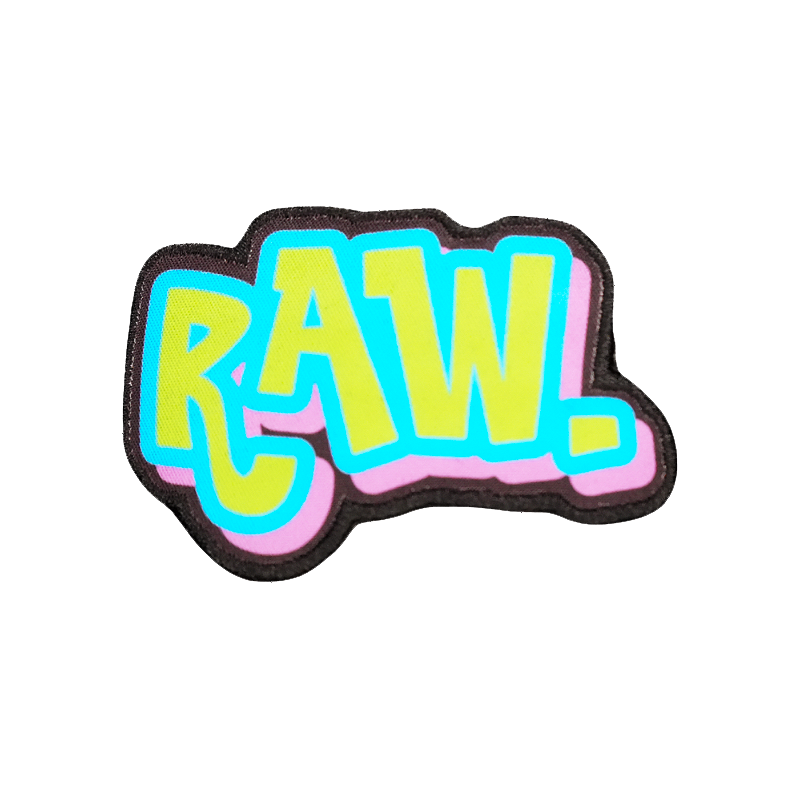
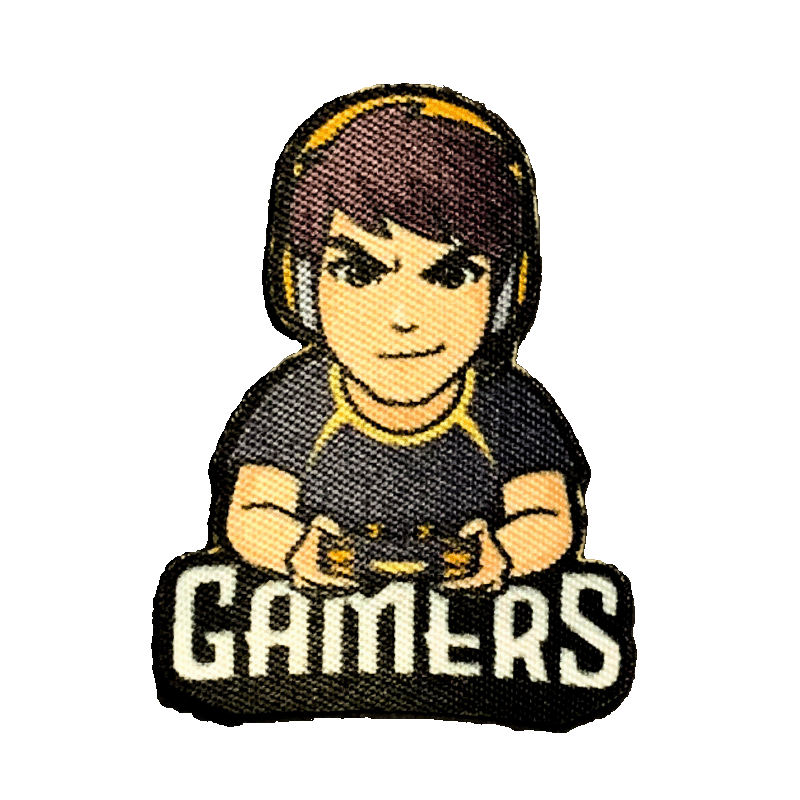
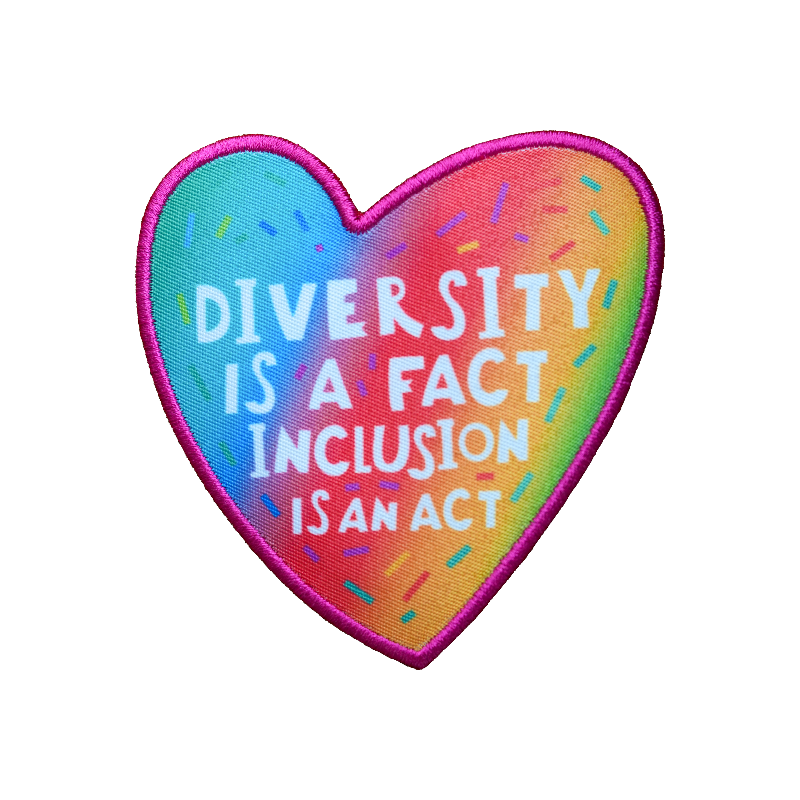
Printed patches use full-colour dye sublimation to reproduce artwork with gradients, shading, photographic detail, and unlimited colours. Dye sublimation is important because the ink penetrates the yarn of the fabric instead of sitting as a surface layer. This helps the design become part of the fabric, so it is not prone to cracking or peeling in the same way as cheaper transfer-style printed badges.
Unlike embroidered or woven patches, printed patches are not limited by stitch direction, thread thickness, or thread colour count. If the design has a photograph, complex illustration, colour blend, fade, shadow, or many colours, printed is usually the correct route.
The main advantage is visual accuracy. Printed patches can hold artwork that would be lost, simplified, or made bulky in embroidery, and they can show colour effects that woven patches cannot reproduce cleanly because woven construction runs in one weave direction. This makes printed patches ideal for detailed logos, photo-style artwork, club crests, event artwork, promotional designs, merchandise, and brand graphics that need colour freedom.
The honest trade-off is that printed patches are flat. They do not have the raised texture of embroidery or the thread direction effect that makes embroidered patches feel more dimensional. If you want full-colour printed artwork but still want stitched character on areas such as the border or key design elements, USA Badge may recommend Subli-Stitch patches instead.
Not all printed badges are made the same way. Some cheaper printed badge options use transfer-style methods, including DTF-style transfers, where the design sits more like a layer on the surface. USA Badge focuses on dye sublimation for printed patches because it gives a more durable result for this product type and avoids the common cracking and peeling complaints associated with cheaper transfer-style badges.
Printed patches also should not be judged like printing on paper. The design is being printed into fabric, and fabric has subtle texture. Very fine lines, tiny lettering, tight gaps, and delicate details may need to be strengthened so they stay clear on the finished patch. USA Badge reviews this during the mockup stage and may suggest making text heavier, improving outlines, or adjusting detail so the printed badge looks good in real production.
Colour matching should also be understood realistically. Because the print is transferred into fabric, chasing a perfect Pantone match is not realistic. Fabric texture, yarn, ink behaviour, and the sublimation process can all affect the final shade. USA Badge can work towards a close match that is acceptable by normal industry standards, but the page should be upfront that exact Pantone-perfect colour is not something printed fabric patches can honestly guarantee.
USA Badge can also create an embroidery-look printed patch. This is still a completely flat printed patch, not raised embroidery, but the artwork can be digitized and prepared with printed stitch effects, shadows, and highlights so parts of the design visually resemble embroidery. This can help the badge look more dimensional while keeping the benefits of a flat full-colour print. If you want this effect, add a note when you upload your artwork or ask how the design can be made to pop; USA Badge will review the artwork and advise during the mockup stage.
Flat printed patches can also be significantly upgraded with an embroidered border finish. The main artwork remains a smooth printed patch, but the edge is physically finished with embroidery, giving the patch a more premium, complete, badge-like appearance. This is one of the best ways to make a printed patch look more substantial without losing the colour freedom of print.
For some designs, the best result is a hybrid treatment. Certain areas can be prepared as embroidery-look print, some areas can be finished with real embroidery, and some details should stay as normal print because they would not translate well into either stitching or stitch-effect artwork. This is where production experience matters. USA Badge does not force one method across the whole design if that will not give the best result. The team can mix normal print, embroidery-look print, and real embroidery where each one works best, so the finished patch has more depth, clarity, and impact.
This is the kind of production judgement customers do not always know to ask for. Many suppliers simply sell a standard printed patch and leave it there. USA Badge looks at the design properly, explains what is possible, and advises how to make the patch look its best before production begins.
USA Badge works with experienced production teams that have produced tens of millions of badges and digitized more than a million designs. That experience matters because the team can advise whether your artwork should be printed, embroidered, woven, Subli-Stitch, PVC, silicone, or another product type before production begins.
Each order is custom made from your artwork. After you upload your design and choose the size, quantity, backing, border, and finishing options, USA Badge reviews the artwork and prepares a free digital mockup with a confirmed quote. After mockup approval, a production sample photograph is supplied for approval before the full order is completed.
Best Uses
- Full-colour logos and brand graphics
- Photographic artwork
- Gradients, shading, fades, and colour blends
- Detailed illustrations
- Event and promotional patches
- Club, team, and school artwork
- Merchandise and retail designs
- Complex crests with many colours
- Designs that would be too detailed for embroidery
Backing Options
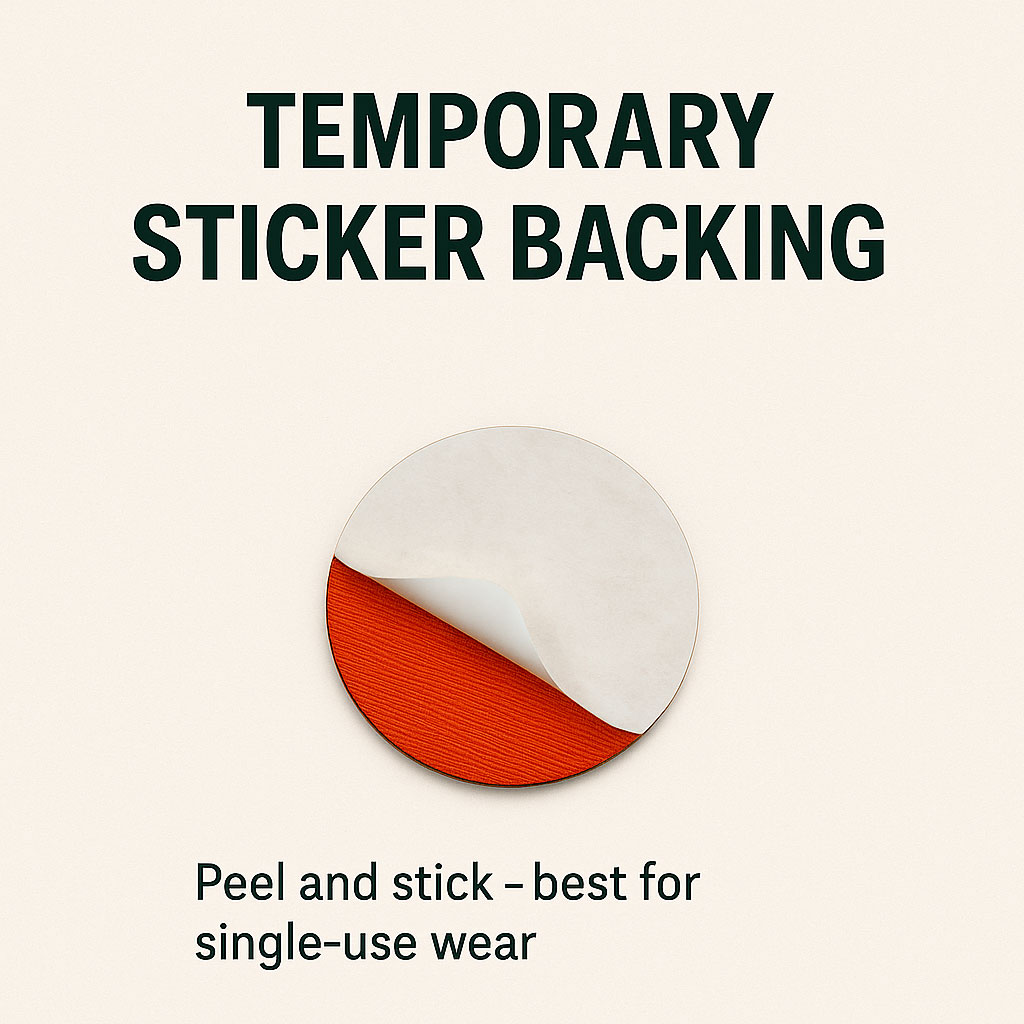
Heat seal backing can be used for compatible heat-press application when the garment and equipment are suitable. It should be applied with the correct heat, pressure, and timing.
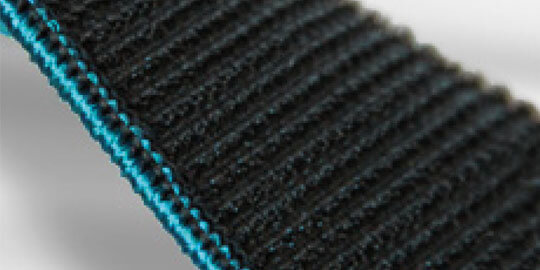
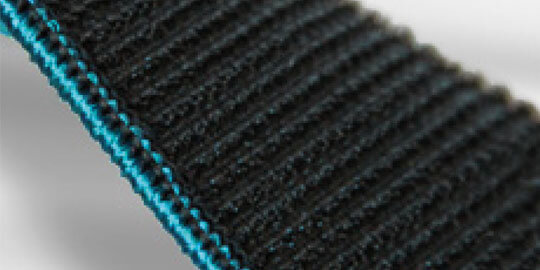
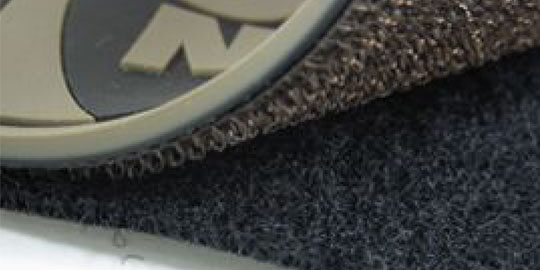
Velcro hook or loop backing is best when the patch needs to be removable or interchangeable, such as uniforms, events, roles, tactical-style garments, or reusable patches.
Non woven backing gives extra structure and stability where needed.
If the customer wants the most secure long-term finish on garments that will be washed or worn regularly, sew-on application should be considered where available.
Border And Edge Options
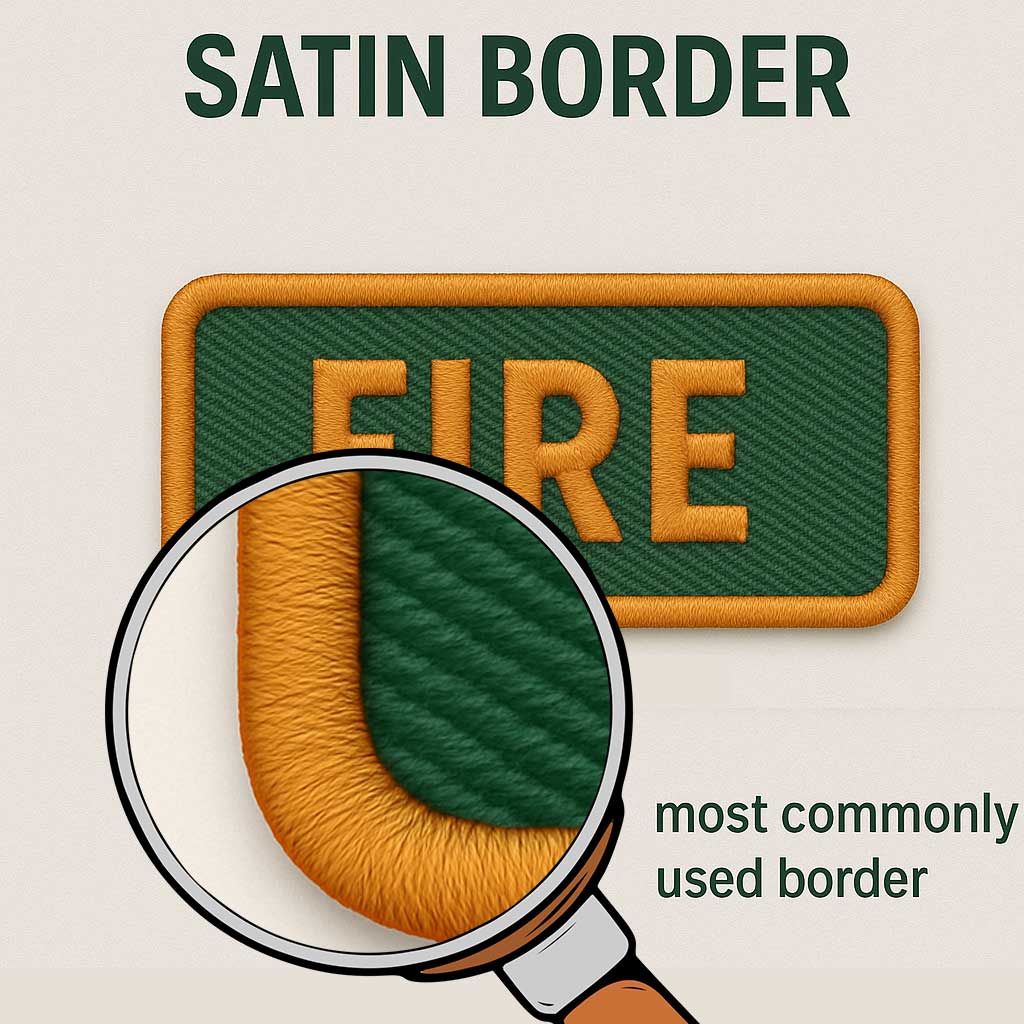
A satin border gives a clean stitched edge and is a strong option for many printed patches. It physically finishes the edge with embroidery, helping a flat printed patch look more premium and complete.
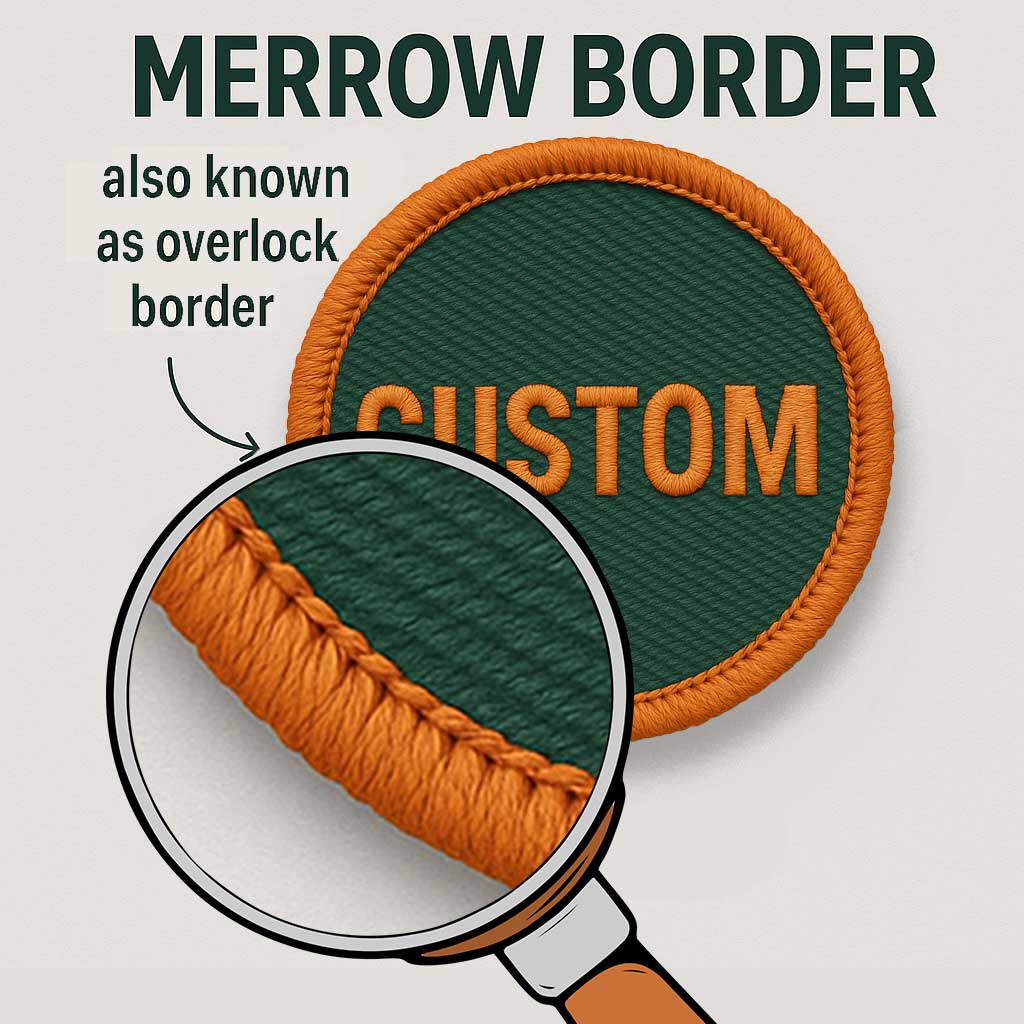
A merrow border gives a thicker traditional overlock edge. It may work for simple shapes, but it adds more bulk and may not suit every heat-seal or detailed edge requirement. When suitable, it can give a printed patch a stronger traditional badge finish.
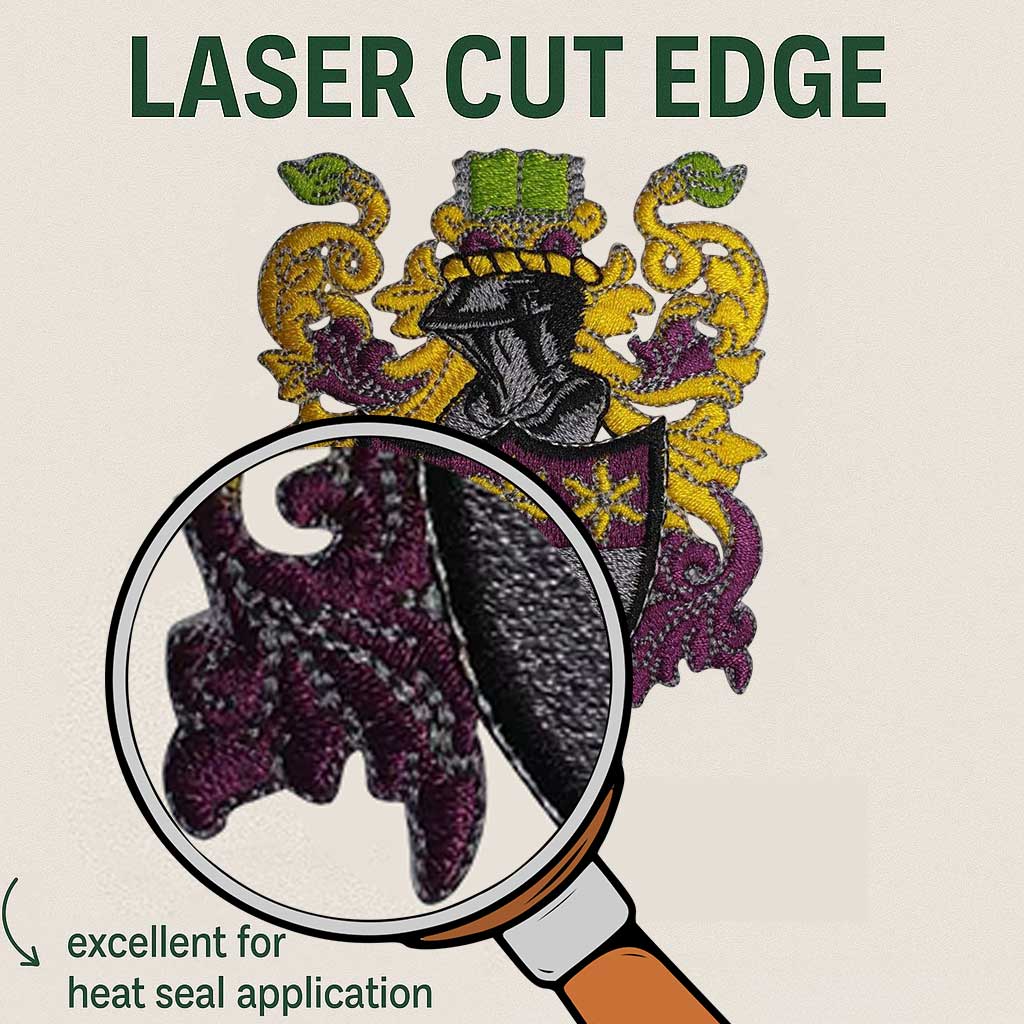
A laser-cut or heat-cut edge gives a flatter finish and may suit selected shapes or artwork where the printed design should stay clean and flat.
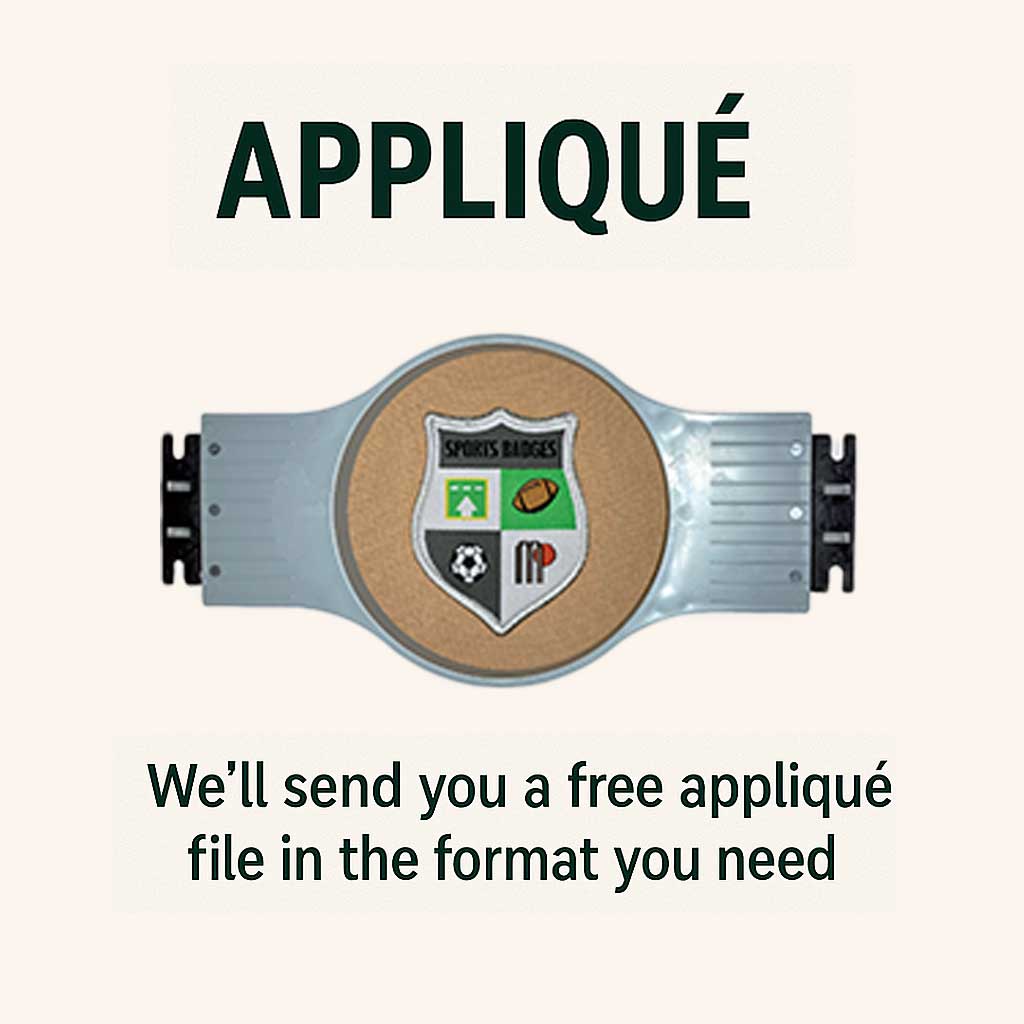
Applique is a specialist option and should only be chosen when the customer has the right embroidery setup or supplier support to apply and finish it correctly.
Artwork Guidance
Printed patches are the best option for complex artwork, but the artwork still needs to be clear enough for the final patch size. High-resolution artwork is important. Vector AI or PDF is preferred where available, and high-resolution PNG, JPG, JPEG, GIF, WEBP, EMB, and DST files can also be uploaded for review.
Use printed patches for gradients, photos, illustrations, shadows, fades, and designs with many colours. If the artwork is low resolution, blurry, too small, or too delicate for fabric texture, USA Badge will advise before production. Text may need to be made bolder, outlines may need to be strengthened, and small details may need to be cleaned up so the final printed patch remains readable. If the design would look better with stitched texture, the team may recommend embroidered, woven, or Subli-Stitch patches instead.
For colour-sensitive designs, provide Pantone or brand colour references if available, but understand that printed fabric can achieve a close match rather than a guaranteed perfect match. USA Badge will be upfront during proofing if a colour may shift on fabric.
Care And Durability
Printed patches are designed for full-colour visual detail on suitable garments, bags, uniforms, and merchandise. For best results, choose the correct backing and application method, avoid harsh washing, bleach, excessive abrasion, and high heat, and follow the garment care instructions.
If heat seal backing is used, the garment must be suitable for heat application and the correct professional equipment should be used.
Compare With Other Options
Choose printed patches for photographs, gradients, shading, colour blends, and full-colour artwork. Choose embroidered patches for raised stitched texture. Choose woven patches for fine thread detail, small text, and lighter wear. Choose Subli-Stitch patches when you want printed colour detail with stitched/embroidered character. Choose PVC or silicone patches for a raised rubber-style finish, and choose faux leather patches for an engraved leather-look alternative.


Printed Patches
Drop your file here or click to browse
Supports emb, dst, ai, jpeg, jpg, png, gif, webp, pdf (max 20MB)


Discover our premium collection of Printed Patches
Printed Patches

Printed Patches

Printed Patches
Product Description
Printed patches use full-colour dye sublimation to reproduce artwork with gradients, shading, photographic detail, and unlimited colours. Dye sublimation is important because the ink penetrates the yarn of the fabric instead of sitting as a surface layer. This helps the design become part of the fabric, so it is not prone to cracking or peeling in the same way as cheaper transfer-style printed badges.
Unlike embroidered or woven patches, printed patches are not limited by stitch direction, thread thickness, or thread colour count. If the design has a photograph, complex illustration, colour blend, fade, shadow, or many colours, printed is usually the correct route.
The main advantage is visual accuracy. Printed patches can hold artwork that would be lost, simplified, or made bulky in embroidery, and they can show colour effects that woven patches cannot reproduce cleanly because woven construction runs in one weave direction. This makes printed patches ideal for detailed logos, photo-style artwork, club crests, event artwork, promotional designs, merchandise, and brand graphics that need colour freedom.
The honest trade-off is that printed patches are flat. They do not have the raised texture of embroidery or the thread direction effect that makes embroidered patches feel more dimensional. If you want full-colour printed artwork but still want stitched character on areas such as the border or key design elements, USA Badge may recommend Subli-Stitch patches instead.
Not all printed badges are made the same way. Some cheaper printed badge options use transfer-style methods, including DTF-style transfers, where the design sits more like a layer on the surface. USA Badge focuses on dye sublimation for printed patches because it gives a more durable result for this product type and avoids the common cracking and peeling complaints associated with cheaper transfer-style badges.
Printed patches also should not be judged like printing on paper. The design is being printed into fabric, and fabric has subtle texture. Very fine lines, tiny lettering, tight gaps, and delicate details may need to be strengthened so they stay clear on the finished patch. USA Badge reviews this during the mockup stage and may suggest making text heavier, improving outlines, or adjusting detail so the printed badge looks good in real production.
Colour matching should also be understood realistically. Because the print is transferred into fabric, chasing a perfect Pantone match is not realistic. Fabric texture, yarn, ink behaviour, and the sublimation process can all affect the final shade. USA Badge can work towards a close match that is acceptable by normal industry standards, but the page should be upfront that exact Pantone-perfect colour is not something printed fabric patches can honestly guarantee.
USA Badge can also create an embroidery-look printed patch. This is still a completely flat printed patch, not raised embroidery, but the artwork can be digitized and prepared with printed stitch effects, shadows, and highlights so parts of the design visually resemble embroidery. This can help the badge look more dimensional while keeping the benefits of a flat full-colour print. If you want this effect, add a note when you upload your artwork or ask how the design can be made to pop; USA Badge will review the artwork and advise during the mockup stage.
Flat printed patches can also be significantly upgraded with an embroidered border finish. The main artwork remains a smooth printed patch, but the edge is physically finished with embroidery, giving the patch a more premium, complete, badge-like appearance. This is one of the best ways to make a printed patch look more substantial without losing the colour freedom of print.
For some designs, the best result is a hybrid treatment. Certain areas can be prepared as embroidery-look print, some areas can be finished with real embroidery, and some details should stay as normal print because they would not translate well into either stitching or stitch-effect artwork. This is where production experience matters. USA Badge does not force one method across the whole design if that will not give the best result. The team can mix normal print, embroidery-look print, and real embroidery where each one works best, so the finished patch has more depth, clarity, and impact.
This is the kind of production judgement customers do not always know to ask for. Many suppliers simply sell a standard printed patch and leave it there. USA Badge looks at the design properly, explains what is possible, and advises how to make the patch look its best before production begins.
USA Badge works with experienced production teams that have produced tens of millions of badges and digitized more than a million designs. That experience matters because the team can advise whether your artwork should be printed, embroidered, woven, Subli-Stitch, PVC, silicone, or another product type before production begins.
Each order is custom made from your artwork. After you upload your design and choose the size, quantity, backing, border, and finishing options, USA Badge reviews the artwork and prepares a free digital mockup with a confirmed quote. After mockup approval, a production sample photograph is supplied for approval before the full order is completed.
Best Uses
- Full-colour logos and brand graphics
- Photographic artwork
- Gradients, shading, fades, and colour blends
- Detailed illustrations
- Event and promotional patches
- Club, team, and school artwork
- Merchandise and retail designs
- Complex crests with many colours
- Designs that would be too detailed for embroidery
Backing Options
Heat seal backing can be used for compatible heat-press application when the garment and equipment are suitable. It should be applied with the correct heat, pressure, and timing.
Velcro hook or loop backing is best when the patch needs to be removable or interchangeable, such as uniforms, events, roles, tactical-style garments, or reusable patches.
Non woven backing gives extra structure and stability where needed.
If the customer wants the most secure long-term finish on garments that will be washed or worn regularly, sew-on application should be considered where available.
Border And Edge Options
A satin border gives a clean stitched edge and is a strong option for many printed patches. It physically finishes the edge with embroidery, helping a flat printed patch look more premium and complete.
A merrow border gives a thicker traditional overlock edge. It may work for simple shapes, but it adds more bulk and may not suit every heat-seal or detailed edge requirement. When suitable, it can give a printed patch a stronger traditional badge finish.
A laser-cut or heat-cut edge gives a flatter finish and may suit selected shapes or artwork where the printed design should stay clean and flat.
Applique is a specialist option and should only be chosen when the customer has the right embroidery setup or supplier support to apply and finish it correctly.
Artwork Guidance
Printed patches are the best option for complex artwork, but the artwork still needs to be clear enough for the final patch size. High-resolution artwork is important. Vector AI or PDF is preferred where available, and high-resolution PNG, JPG, JPEG, GIF, WEBP, EMB, and DST files can also be uploaded for review.
Use printed patches for gradients, photos, illustrations, shadows, fades, and designs with many colours. If the artwork is low resolution, blurry, too small, or too delicate for fabric texture, USA Badge will advise before production. Text may need to be made bolder, outlines may need to be strengthened, and small details may need to be cleaned up so the final printed patch remains readable. If the design would look better with stitched texture, the team may recommend embroidered, woven, or Subli-Stitch patches instead.
For colour-sensitive designs, provide Pantone or brand colour references if available, but understand that printed fabric can achieve a close match rather than a guaranteed perfect match. USA Badge will be upfront during proofing if a colour may shift on fabric.
Care And Durability
Printed patches are designed for full-colour visual detail on suitable garments, bags, uniforms, and merchandise. For best results, choose the correct backing and application method, avoid harsh washing, bleach, excessive abrasion, and high heat, and follow the garment care instructions.
If heat seal backing is used, the garment must be suitable for heat application and the correct professional equipment should be used.
Compare With Other Options
Choose printed patches for photographs, gradients, shading, colour blends, and full-colour artwork. Choose embroidered patches for raised stitched texture. Choose woven patches for fine thread detail, small text, and lighter wear. Choose Subli-Stitch patches when you want printed colour detail with stitched/embroidered character. Choose PVC or silicone patches for a raised rubber-style finish, and choose faux leather patches for an engraved leather-look alternative.
Our custom printed patches use high-resolution printing to capture every color, gradient, and intricate detail—ideal for complex logos, fine artwork, and full-color images, giving your brand a professional edge across the U.S.
From sleek edges to specialty treatments, we offer a range of finishing touches that make your patches stand out and reinforce your brand’s quality and authenticity.
Our superior adhesive ensures these patches stay firmly in place on uniforms, hats, jackets, and bags, providing long-lasting, professional results without peeling or fading.
We deliver quick turnarounds, fair pricing, and a simple approval process—ensuring you get the perfect custom printed patches for your American business without wasting time or breaking your budget.